
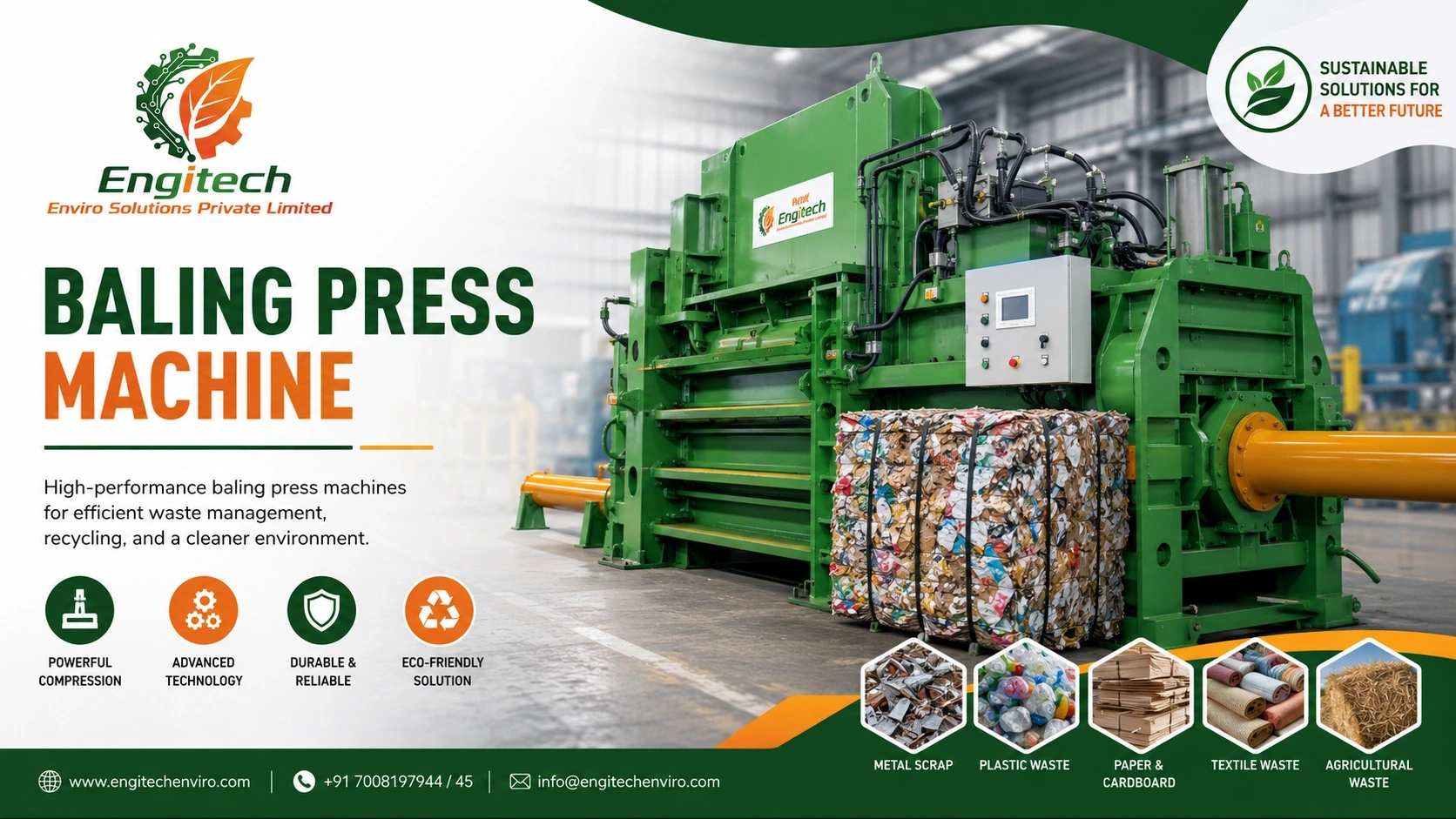
The industrial sector needs effective waste disposal systems because they help businesses run their operations efficiently while protecting the environment. The industrial sector produces daily waste that includes metal waste and cardboard materials, plastic items, paper products, textile goods, and agricultural waste. The management of waste needs to be done with proper methods because it helps to decrease both storage issues, transportation expenses, and environmental damage. The hydraulic baling press machine serves as an essential component for this process.
Engitech Enviro recognises that modern industries need advanced recycling systems and waste management systems for their operations. Companies use high-performance baling machines to enhance their waste processing systems and increase their recycling capabilities. The blog will explain the concept of balers together with the various hydraulic baling system types and their industrial uses, and the primary advantages they provide.
What is a Baler?
People frequently use search engines to look up the definition of a baler and the definition of a baler when they want to study waste management equipment. A baler is a machine that compresses waste materials into compact bundles, which people call bales. The compressed bales become simpler to manage because they can be moved, stored and recycled.
Baler machines use hydraulic and mechanical systems to achieve waste material volume reduction through their operational processes. The machines find their application in recycling facilities and storage areas, production plants, metal processing facilities and waste disposal sites.
Baling machines exist to enhance waste management processes because they enable better waste handling while decreasing expenses.
What is a Hydraulic Baling Press?
The hydraulic baling press functions as a powerful industrial machine which uses hydraulic force to compact waste materials into dense bales. Hydraulic machines provide superior compression strength and increased operational efficiency, together with consistent bale production quality when compared to conventional manual systems.
The hydraulic system operates by using pumps and cylinders, which create high pressure to compress different types of materials.
- Metal scrap
- Cardboard waste
- Plastic bottles
- Textile waste
- Aluminum cans
- Industrial packaging waste
A hydraulic baling press machine is widely preferred because of its durability, high compression efficiency, and energy-saving operation.
How Does a Hydraulic Baling Press Machine Work?
A hydraulic baling press machine operates through a straightforward process which achieves exceptional results. Workers manually load waste materials into the compression chamber while automated conveyors handle waste material transportation. The hydraulic cylinders start their operation after the chamber reaches its maximum capacity to compress the contents.
The compact bale requires tying with either wires or straps after the compression process. The machine ejects the completed bale to prepare it for storage and transportation, and recycling purposes.
Modern baling machines often include:
- Automatic feeding systems
- PLC control panels
- Conveyor systems
- Auto bale ejection
- Safety sensors
These advanced features improve operational efficiency and reduce manual labour.
Types of Hydraulic Baling Press Machines
Different industries require different waste processing solutions. Therefore, several types of hydraulic balers are available in the market.
1. Vertical Hydraulic Baling Press
A vertical hydraulic baling press machine is compact and suitable for small businesses or industries with limited space.
Common Applications:
- Retail stores
- Warehouses
- Packaging industries
- Supermarkets
- Printing industries
Materials Processed:
- Paper waste
- Cardboard
- Plastic films
- Textile scraps
Benefits:
- Space-saving design
- Easy installation
- Low maintenance
- Cost-effective solution
Vertical balers are ideal for businesses with moderate waste generation.
2. Horizontal Hydraulic Baling Press
Horizontal balers are large industrial systems designed for continuous and high-volume waste processing.
Features:
- Automatic operation
- Conveyor feeding
- Continuous compression
- High productivity
Common Industries:
- Recycling plants
- FMCG industries
- Manufacturing units
- Distribution centers
Horizontal baling machines are capable of processing large quantities of recyclable materials efficiently.
3. Hydraulic Scrap Baling Press Machine
A hydraulic scrap baling press machine is specially designed for compressing metal scrap into compact blocks or bundles. These machines are widely used in metal recycling industries.
Materials Handled:
- Aluminum scrap
- Steel scrap
- Copper scrap
- Iron sheets
- Metal cans
Advantages:
- Strong compression force
- Reduced transportation cost
- Improved recycling efficiency
- Better scrap storage management
Metal recycling industries heavily depend on hydraulic scrap balers to improve productivity and reduce operational expenses.
4. Triple Compression Baling Press Machine
A triple compression baling press machine is one of the most advanced waste compression systems available today. These machines compress scrap materials from three sides, resulting in extremely dense and compact bales.
Working Principle:
The machine applies pressure horizontally, vertically, and from the top to achieve maximum compression.
Applications:
- Heavy metal recycling
- Automobile scrap processing
- Industrial waste recycling
- Large-scale scrap yards
Key Benefits:
- High-density bales
- Better transportation efficiency
- Reduced storage space
- Increased recycling value
Triple compression systems are ideal for industries handling bulky metal waste.
Baler Machine Uses in Different Industries
Understanding baler machine uses helps industries choose suitable recycling equipment according to their operational needs.
Recycling Industry
Recycling facilities use hydraulic baling press machines for compressing recyclable waste into manageable bales. This improves sorting, storage, and transportation efficiency.
Manufacturing Sector
Manufacturing units generate large volumes of packaging waste, cardboard, plastic scrap, and metal residues. A baler machine helps maintain cleanliness and organised waste handling.
Textile Industry
Textile factories use balers for compressing cotton waste, yarn scraps, fabric leftovers, and textile fibres.
Agriculture Industry
Agricultural balers are used for compressing hay, straw, and crop residue into transportable bales.
Metal Recycling Plants
A hydraulic scrap baling press machine is essential for metal recycling businesses. It helps reduce loose scrap volume and improves transportation efficiency.
Retail and Warehousing
Warehouses and supermarkets generate huge amounts of cardboard waste daily. Vertical balers help save storage space and improve waste management.
Benefits of Hydraulic Baling Press Machines
Investing in a high-quality hydraulic baling press provides several long-term operational and environmental advantages.
1. Space Optimization
Loose waste materials occupy large areas. A baler machine compresses waste into compact bundles, reducing storage requirements significantly.
2. Reduced Transportation Cost
Dense bales are easier and cheaper to transport compared to loose materials. Businesses can reduce fuel and logistics expenses.
3. Improved Workplace Safety
Proper waste management minimises workplace clutter and reduces the risk of accidents.
4. Better Recycling Efficiency
Compact bales simplify recycling processes and improve handling efficiency for recycling plants.
5. Eco-Friendly Waste Management
Using baling machines supports sustainable waste disposal practices and reduces landfill waste.
6. Increased Revenue Opportunities
Compressed recyclable materials often have higher market value, helping industries generate additional income.
7. High Operational Efficiency
Modern hydraulic baling press machines automate waste processing and reduce manual labour requirements.
Features of Modern Hydraulic Baling Machines
At Engitech Enviro, modern waste management systems are designed with advanced technologies to improve performance and reliability.
Common Features Include:
- Heavy-duty steel construction
- Hydraulic power systems
- Energy-efficient motors
- PLC automation controls
- Safety interlocks
- Automatic bale tying systems
- Conveyor integration
These features help industries achieve smooth and efficient waste processing operations.
Factors to Consider Before Buying a Baling Press Machine
Choosing the right hydraulic baling press machine depends on several important factors.
Waste Material Type
Different machines are designed for paper, plastic, textile, or metal waste.
Waste Volume
Industries generating high waste volumes require automatic or horizontal balers.
Automation Requirement
Businesses can choose between manual, semi-automatic, or fully automatic systems.
Compression Capacity
The required bale density and compression force should be considered before purchasing.
Installation Space
Machine dimensions and available workspace are important for proper installation.
Maintenance Support
Reliable after-sales service and maintenance support ensure long-term machine performance.
Future of Hydraulic Baling Press Machines
The future of waste management is becoming smarter and more sustainable. Modern hydraulic baling press machines are evolving with automation, IoT monitoring, and energy-efficient technologies.
Advanced systems now include:
- Smart operational monitoring
- Remote diagnostics
- Automated sorting integration
- Energy-saving hydraulic systems
- AI-based waste management controls
As industries continue focusing on sustainability, the demand for advanced baling machines is expected to grow rapidly.
Why Choose Engitech Enviro?
Engitech Enviro provides modern waste disposal systems together with recycling solutions that serve industrial needs. Our mission is to provide businesses with dependable and advanced recycling technology that will enhance their operational efficiency.
We focus on:
- High-performance machinery
- Durable industrial designs
- Energy-efficient systems
- Advanced automation technology
- Sustainable waste management solutions
Whether you need a compact vertical baler or a fully automated triple compression baling press machine, Engitech Enviro aims to provide solutions that meet modern industrial requirements.
Conclusion
The waste management, recycling and scrap processing industries now rely on a hydraulic baling press as their most important operational machine. The machines enable businesses to decrease waste production while they enhance their recycling processes and decrease their operational expenses through cardboard, plastics, and metal scrap and textile waste processing.
Companies need to study what a baler is and the various types of hydraulic baling press machines and their industrial applications because this knowledge helps them select appropriate equipment for achieving sustainable production and operational efficiency.
Engitech Enviro believes that advanced recycling technology functions as the essential basis for creating a cleaner and more effective industrial future. Baling machines with high-quality features enable organizations to handle waste more effectively while maintaining sustainable business operations.