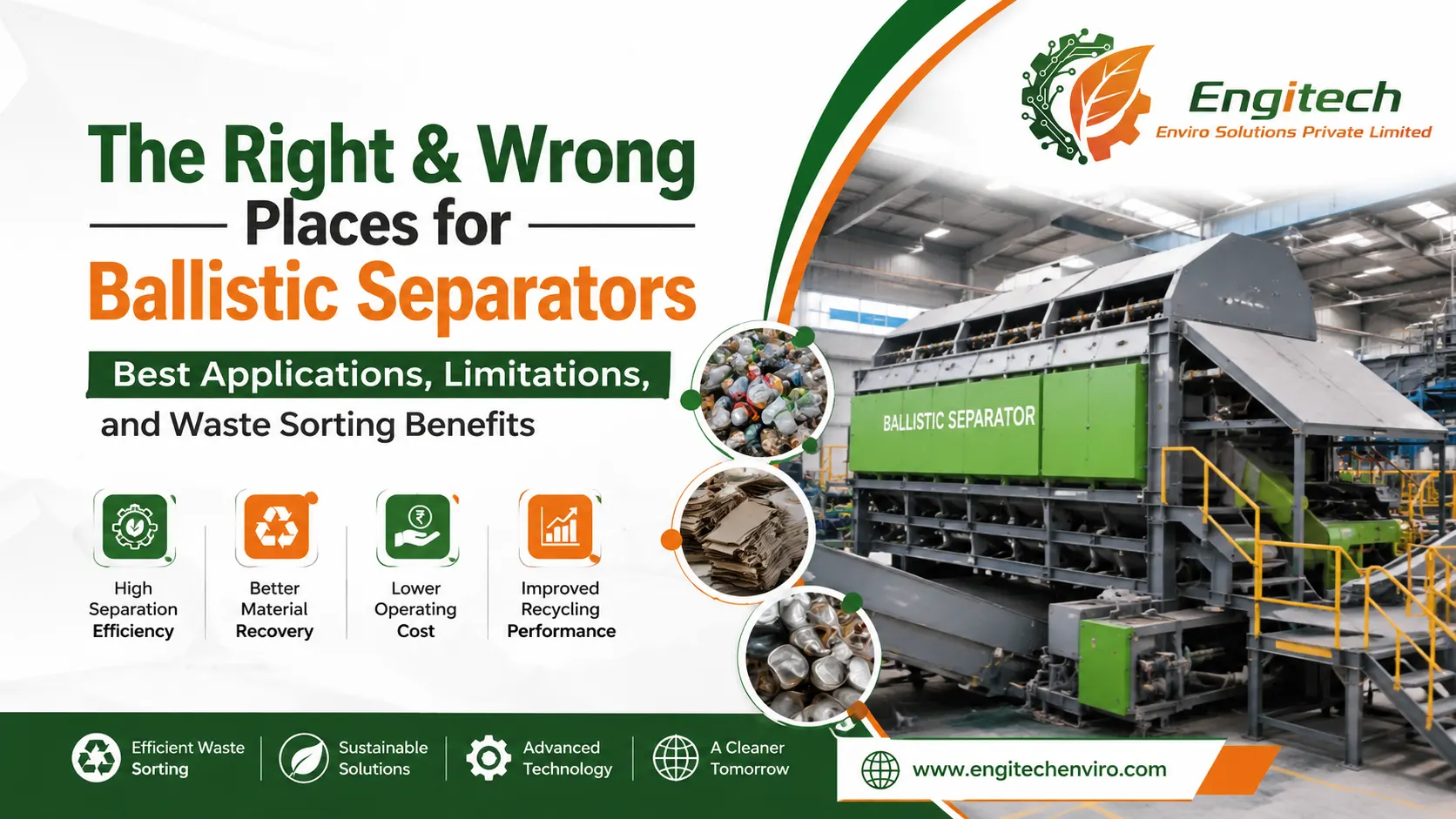
One type of sorting technology that has proven to be among the best for separating mixed waste materials and recyclables is ballistic separators. They are useful because of their ability to sort waste material according to different characteristics like weight, size, density, and movements.
Recycling plants today are encountering a common problem: the need to effectively separate mixed waste materials for reuse. Due to the increasing importance of recycling in the efforts towards sustainability, sorting technology plays an integral part in turning waste into reusable materials.
Nevertheless, it should be noted that ballistic separators are not always appropriate in all cases. Thus, it is necessary to know about their capabilities and limitations in order to optimize the sorting process and maximize efficiency during recycling.
In this detailed guide from Engitech Enviro, you can learn about the best applications of ballistics separators and their features as well as the benefits, drawbacks, and considerations that are involved in buying such a ballistic separator machine.
What Are Ballistic Separators?
The Ballistic Separator is a type of sorting machine that uses mechanical methods to separate mixed materials into fractions based on physical differences.
As opposed to optical sorters, which depend on light sensors and cameras, the ballistic separators use mechanical motion to sort material based on:
- Shape
- Density
- Weight
- Rigidity
- Rolling characteristics
These machines are widely used in modern Material Recovery Facilities (MRFs), municipal solid waste plants, packaging waste recycling facilities, and plastic recovery operations.
The primary objective of a ballistic separator is to improve material purity and increase recycling efficiency while reducing manual sorting requirements.
Ballistic Separator Working Principle
The functioningballistic separator working principle allows one to understand why this type of machines work effectively.
This machine comprises a set of sloping paddles or vibrating screens which constantly transport material upwards while at the same time vibrating.
While moving through the machine, the material gets divided into three major fractions:
1. Flat Materials (2D Fraction)
These include:
- Paper
- Cardboard
- Plastic films
- Flexible packaging
Because these materials are lightweight and flat, they move upward across the paddles.
2. Rolling Materials (3D Fraction)
These include:
- Plastic bottles
- Metal cans
- Containers
- Rigid packaging
These items roll downward due to gravity and are collected separately.
3. Fine Materials
Small particles fall through screen openings and are collected as a separate fraction.
This separation process significantly improves downstream sorting operations and increases overall recycling performance.
Why Ballistic Separator Recycling Is Important
The demand for efficient ballistic separator recycling systems has grown rapidly due to increasing waste volumes and stricter recycling regulations.
Benefits include:
- Higher recycling rates
- Improved material purity
- Reduced landfill dependency
- Lower labor requirements
- Better resource recovery
- Enhanced plant productivity
For modern recycling facilities, ballistic separation has become a critical step in achieving sustainability goals.
The Right Places for Ballistic Separators
Not every recycling process is the same. Understanding the ideal applications of ballistic separators ensures maximum performance.
1. Municipal Solid Waste (MSW) Facilities
Municipal waste contains a wide variety of materials such as:
- Plastic bottles
- Cardboard
- Paper
- Food packaging
- Cans
Ballistic separators excel at separating these mixed streams into distinct categories for further processing.
This is one of the most common applications used by recycling plants worldwide.
2. Material Recovery Facilities (MRFs)
Material Recovery Facilities process large quantities of mixed recyclables daily.
Ballistic separators help:
- Improve sorting efficiency
- Increase throughput
- Reduce contamination
- Produce cleaner recyclable streams
As a result, many advanced MRFs include ballistic separation as a standard component of their sorting lines.
3. Plastic Recycling Plants
Plastic waste streams often contain:
- Films
- Rigid plastics
- Bottles
- Containers
A ballistic separator machine effectively separates flexible plastics from rigid plastics before further processing.
This improves recycling quality and reduces contamination.
4. Packaging Waste Processing Facilities
Packaging waste consists of both 2D and 3D materials.
Examples include:
- Corrugated boxes
- Plastic bottles
- Flexible packaging
- Beverage cartons
Ballistic separators are particularly effective in these environments because they separate materials based on their movement characteristics.
5. Commercial and Industrial Waste Facilities
Industrial waste often contains recoverable materials mixed together.
Ballistic separation helps recover:
- Plastics
- Cardboard
- Metals
- Packaging materials
This increases recovery rates and supports circular economy initiatives.
The Wrong Places for Ballistic Separators
Although highly versatile, ballistic separators are not suitable for every waste stream.
1. Wet Organic Waste Processing
Materials with excessive moisture can stick together and affect separation efficiency.
Examples include:
- Food waste
- Wet organic waste
- Sludge-containing materials
Such waste streams may clog the machine and reduce performance.
2. Extremely Fine Material Streams
When most materials are already very small in size, ballistic separation provides limited benefits.
Alternative screening technologies may be more appropriate.
3. Construction and Demolition Waste
Heavy debris such as:
- Concrete
- Bricks
- Stones
- Rubble
can cause excessive wear on machine components.
Specialized sorting equipment is generally recommended for these applications.
4. Highly Contaminated Waste Streams
Waste streams containing excessive mud, moisture, or sticky contaminants can negatively impact sorting efficiency.
Proper pre-treatment is often required before ballistic separation.
Key Benefits of Ballistic Separators
Increased Recycling Efficiency
One of the biggest advantages is improved material separation.
Cleaner output streams result in higher-value recyclables.
Reduced Labor Costs
Automated separation significantly reduces the need for manual sorting.
This lowers operational expenses and improves worker safety.
Higher Material Purity
Ballistic separators produce cleaner material fractions, increasing the value of recovered recyclables.
Improved Plant Throughput
These machines can process large volumes of waste quickly, helping facilities handle increasing waste generation.
Energy Efficient Operation
Compared with some advanced sorting technologies, ballistic separators consume relatively low energy while delivering excellent performance.
Factors to Consider Before Buying a Ballistic Separator Machine
Selecting the right ballistic separator machine requires careful evaluation.
Consider:
Waste Composition
Understand the type of waste being processed.
Plant Capacity
Choose equipment capable of handling current and future throughput requirements.
Maintenance Requirements
Regular maintenance ensures long-term reliability.
Available Space
Machine dimensions should fit within existing plant layouts.
Integration with Other Equipment
The separator should work seamlessly with conveyors, optical sorters, shredders, and screening systems.
Understanding Ballistic Separator Price
The ballistic separator price varies significantly depending on several factors.
These include:
- Machine size
- Processing capacity
- Material quality
- Automation level
- Manufacturer reputation
- Customization requirements
Smaller units typically cost less, while high-capacity industrial systems require a larger investment.
Although the initial investment may appear substantial, the long-term savings from improved recovery rates and reduced labor costs often provide an excellent return on investment.
Stadler Ballistic Separator and Industry Innovations
One of the most recognized names in the recycling industry is the stadler ballistic separator technology.
Advanced ballistic separators from leading manufacturers have introduced features such as:
- Improved screening efficiency
- Adjustable paddle angles
- Enhanced wear resistance
- Better throughput capacity
- Lower maintenance requirements
These innovations continue to improve the effectiveness of recycling facilities worldwide.
Future of Ballistic Separation Technology
As recycling targets become more ambitious, the role of ballistic separators will continue to grow.
Future developments may include:
- Smart monitoring systems
- AI-assisted sorting integration
- Increased automation
- Enhanced material recovery rates
- Predictive maintenance technology
These advancements will help recycling facilities achieve higher efficiency and sustainability.
Why Choose Engitech Enviro for Waste Management Solutions?
We at Engitech Enviro have knowledge regarding the problems associated with modern recycling facilities and waste management plants. Our specialized understanding of waste management technologies will ensure that our clients are able to optimize their operations and achieve maximum efficiency.
Our mission is to provide clients with cutting-edge technology solutions that not only benefit them in terms of efficiency but also help them contribute towards sustainable development.
Be it an existing recycling plant or a facility under construction, our team at Engitech Enviro will be able to assist you in identifying the optimal technology.
Conclusion
Ballistic Separators have gained importance in current recycling facilities since they play a key role in the effective separation of mixed waste materials into useful recyclable fractions. This equipment plays a significant role in the effective separation of municipal waste, packaging waste, plastics and material recovery facility (MRF). Investing in such machinery would be worthwhile for companies that are looking forward to enhancing their recycling rates.
But there is also a need to know where these equipment could work effectively and areas where their effectiveness is doubtful. For instance, the machines work well when it comes to sorting dry recycled waste. They do not work effectively when it comes to wet organic wastes.
It is through careful assessment of the waste and facility conditions that the need for ballistic separator machine becomes clear.
With continuous technological advancements in recycling methods, these separators will continue playing their part.