Every day, modern cities, together with their industrial operations, produce massive quantities of waste. The world faces its most serious environmental problem because of the increasing waste stream, which includes household garbage, commercial refuse, and industrial scrap, together with packaging waste. The Industrial Municipal Waste Shredder functions as an essential tool that helps decrease waste material while increasing recycling results. Establishing cleaner, sustainable communities requires organizations to adopt efficient waste management processes as their fundamental operational need.
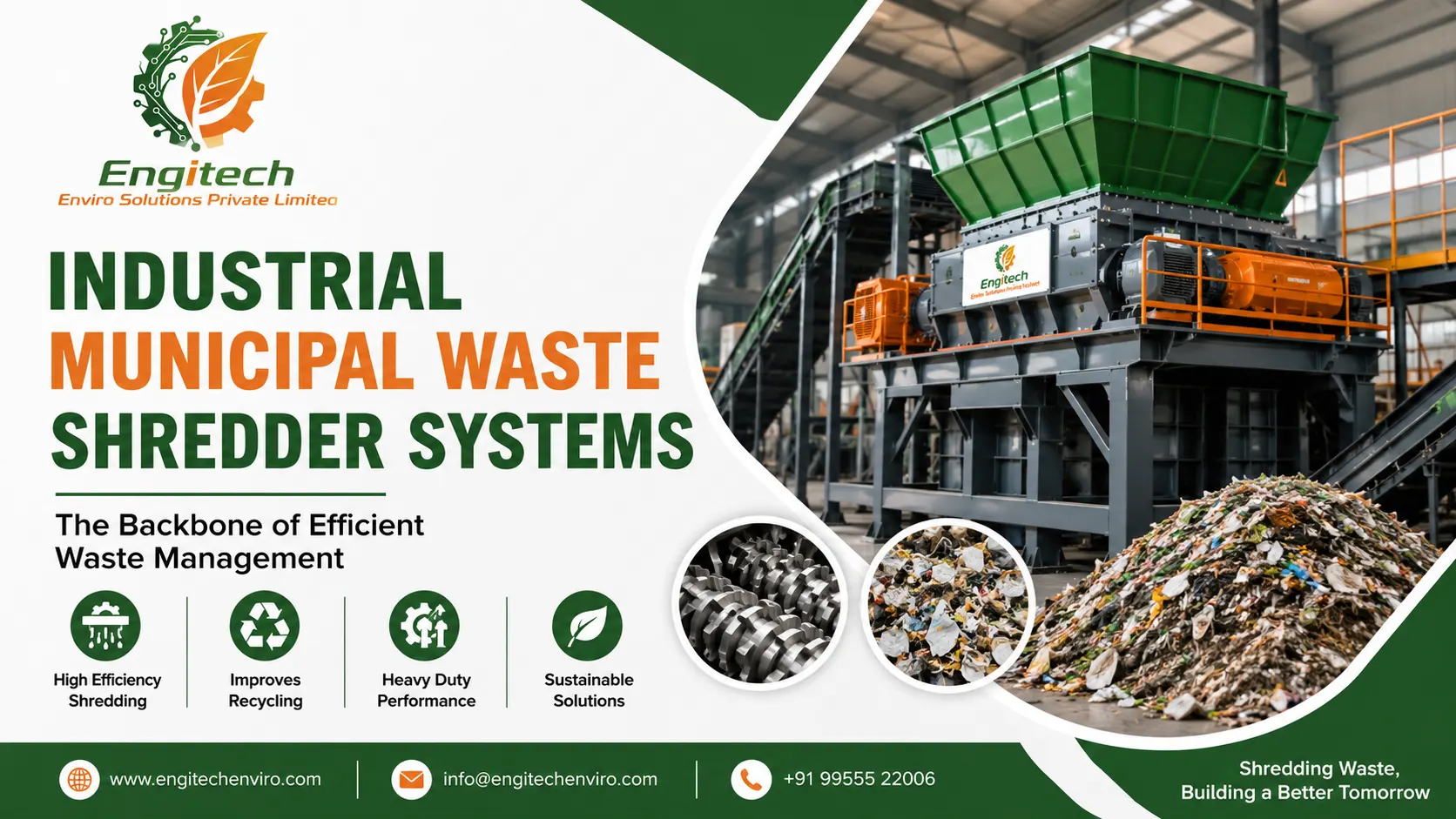
Industrial shredding technology performs essential functions in this particular area. Advanced waste shredding systems help industries and municipalities process large volumes of waste quickly, safely, and efficiently. Engitech Enviro creates innovative shredding solutions that enable current recycling and waste management operations to function through their durable and efficient high-performance machines.
The Growing Importance of Waste Shredding Systems
The combination of urban development, industrial expansion, and rising consumer demand has resulted in higher levels of waste production from both cities and industries throughout the world. The current waste disposal techniques do not provide sufficient capacity to manage this problem successfully. The modern environmental management systems require recycling together with waste recovery as their fundamental elements.
The process of waste recycling or further processing needs the waste material to be broken down into smaller and more practical pieces. An industrial waste shredder serves this specific requirement. The machines operate by crushing large waste materials into tiny fragments, which enhances the efficiency of the subsequent processes for handling, reclaiming, and discarding the materials.
Shredders enable better operational performance for organizations that deal with plastic waste, paper and wood, textiles and rubber, and mixed municipal waste materials.
Understanding Industrial Municipal Waste Shredders
The municipal solid waste shredder operates as a robust machine that processes waste materials that municipalities combine into their waste streams. The shredders in this system process waste materials that are gathered from residential areas, commercial establishments, educational facilities, and municipal garbage collection networks.
Modern shredders are capable of processing:
- Plastic containers
- Food packaging
- Paper and cardboard
- Textile waste
- Organic waste
- Wood materials
- Electronic waste
- Household garbage
- Industrial scrap
A high-quality municipal waste shredder machine reduces bulky waste into smaller particles that are easier to separate, recycle, or convert into energy.
How Industrial Shredders Improve Waste Management
Industrial shredders have revolutionized the waste management practices of both industrial facilities and municipal waste collection systems. The equipment functions as the essential foundation that enables waste processing facilities to operate their activities in an effective manner.
1. Waste Volume Reduction
The main benefit of industrial garbage shredders stems from their capability to decrease waste material volume through shredding operations. Excessive storage space requirements and increased transportation expenses result from large amounts of waste materials. Industries achieve better storage capacity and enhanced logistics performance through waste reduction achieved by their shredding operations.
2. Improved Recycling Efficiency
Recycling shredders, which operate in contemporary times, prepare waste materials for subsequent recycling operations. The process of shredding materials into uniform sizes facilitates their separation through magnetic separators, air classifiers, washing systems, and granulators.
The system boosts recyclable material recovery rates while enhancing the productivity of the recycling facility.
3. Better Waste Handling
People find it challenging to handle bulky waste materials because they require special equipment, which makes the process of waste disposal difficult. Shredders simplify waste handling by converting irregular waste into manageable particles that move easily through conveyor systems and processing equipment.
4. Support for Waste-to-Energy Projects
Many waste processing plants convert municipal waste into refuse-derived fuel (RDF) or energy. A properly designed MSW shredder machine produces consistent material size, which enhances combustion efficiency and improves fuel quality.
5. Environmental Sustainability
Industrial shredders help reduce landfill waste by increasing recycling and recovery rates. The system provides support for environmentally sustainable waste management methods, which assist businesses in meeting their environmental compliance requirements.
Role of Industrial Waste Grinders in Recycling
The modern waste management facilities depend on an industrial waste grinder as an essential machine. Shredders break waste materials into pieces, whereas grinders reduce materials to smaller particles by crushing and pulverizing them.
The waste processing systems of industries use shredders together with grinders to achieve maximum efficiency. The machines provide operational benefits for these specific tasks.
- Organic waste processing
- Biomass recycling
- Food waste management
- Sludge treatment
- Industrial residue reduction
Advanced municipal solid waste grinders improve material preparation for composting, biofuel production, and energy recovery applications.
Types of Municipal Waste Shredder Systems
Different waste management applications require different shredding technologies. Selecting the right shredder depends on material type, processing capacity, and output requirements.
Single Shaft Shredders
A municipal solid waste single shaft shredder is widely used for controlled size reduction applications. These shredders use a single rotating shaft fitted with cutting blades that process materials against stationary knives.
Single-shaft shredders are ideal for:
- Plastic waste
- Paper waste
- Textile materials
- Wood waste
- Mixed municipal waste
They are energy-efficient and provide a uniform output particle size.
Double Shaft Shredders
Double shaft shredders are designed for high-torque applications and can process tougher waste materials such as tires, drums, metal scrap, and industrial waste.
These machines use two rotating shafts that tear materials apart with powerful cutting action.
Four Shaft Shredders
Four-shaft shredders offer precise size reduction and improved output control. They are often used in hazardous waste processing and advanced recycling systems.
Applications of MSW Shredders
An MSW shredder is widely used across municipal waste processing plants and recycling facilities. These machines support several important waste management applications.
Municipal Waste Processing
Municipalities use shredders to process household and commercial waste before sorting or disposal.
Recycling Plants
Shredders prepare recyclable materials for further processing and recovery.
Waste-to-Energy Facilities
Uniformly shredded waste improves combustion efficiency in RDF and waste-to-energy systems.
Composting Operations
Organic waste shredding improves compost quality and decomposition speed.
Industrial Waste Management
Industries use shredders to manage production waste, packaging materials, and scrap efficiently.
Key Features of Modern Waste Shredder Systems
Modern shredders are designed with advanced engineering and automation technologies that improve operational performance and reliability.
Heavy-Duty Design
Industrial shredders are built using wear-resistant materials to handle demanding operating conditions.
High Processing Capacity
Modern systems can process large volumes of waste continuously with minimal downtime.
Energy-Efficient Operation
Advanced motor systems and intelligent controls reduce energy consumption.
Automated Safety Features
Overload protection, emergency stop systems, and automatic reverse functions improve operational safety.
Double Shaft Shredders
Double shaft shredders are designed for high-torque applications and can process tougher waste materials such as tires, drums, metal scrap, and industrial waste.
These machines use two rotating shafts that tear materials apart with powerful cutting action.
Four Shaft Shredders
Four-shaft shredders offer precise size reduction and improved output control. They are often used in hazardous waste processing and advanced recycling systems.
Applications of MSW Shredders
An MSW shredder is widely used across municipal waste processing plants and recycling facilities. These machines support several important waste management applications.
Municipal Waste Processing
Municipalities use shredders to process household and commercial waste before sorting or disposal.
Recycling Plants
Shredders prepare recyclable materials for further processing and recovery.
Waste-to-Energy Facilities
Uniformly shredded waste improves combustion efficiency in RDF and waste-to-energy systems.
Composting Operations
Organic waste shredding improves compost quality and decomposition speed.
Industrial Waste Management
Industries use shredders to manage production waste, packaging materials, and scrap efficiently.
Key Features of Modern Waste Shredder Systems
Modern shredders are designed with advanced engineering and automation technologies that improve operational performance and reliability.
Heavy-Duty Design
Industrial shredders are built using wear-resistant materials to handle demanding operating conditions.
High Processing Capacity
Modern systems can process large volumes of waste continuously with minimal downtime.
Energy-Efficient Operation
Advanced motor systems and intelligent controls reduce energy consumption.
Automated Safety Features
Overload protection, emergency stop systems, and automatic reverse functions improve operational safety.
Easy Maintenance
The shredders require less downtime because their design enables easy blade replacement and maintenance work.
Engitech Enviro designs its industrial shredding systems to provide waste management facilities with reliable performance, durable equipment, and optimal operational efficiency.
Challenges in Municipal Waste Management
Municipal waste management is a complex challenge due to the mixed nature of waste materials. Improper waste handling can lead to environmental pollution, health hazards, and inefficient recycling operations.
Some common challenges include:
- Increasing urban waste generation
- Limited landfill availability
- Rising transportation costs
- Poor waste segregation
- Environmental regulations
- Demand for sustainable recycling solutions
Advanced shredding systems help overcome these challenges by improving waste processing speed, recycling efficiency, and resource recovery.
Choosing the Right Industrial Waste Shredder
Selecting the right shredding equipment is critical for achieving efficient waste management operations.
Material Type
Different materials require different cutting technologies and machine configurations.
Throughput Capacity
Industries should choose machines capable of handling the required waste volume efficiently.
Output Size Requirements
The required particle size determines the shredder type and blade design.
Maintenance Requirements
Machines with durable components and easy maintenance features reduce operational costs.
Energy Efficiency
Energy-saving systems help reduce electricity consumption and improve sustainability.
A trusted manufacturer like Engitech Enviro can provide customized shredding solutions based on specific industrial and municipal waste processing requirements.
Future of Waste Shredding Technology
The future of Municipal Waste Shredder is becoming increasingly automated and technology-driven. Smart shredding systems equipped with sensors and AI monitoring, and automated controls enable operators to maintain their equipment through predictive maintenance.
Industries Municipal Waste Shredder are now developing sustainable waste recovery technologies that help them achieve circular economy goals. Modern shredders now use advanced sorting systems, robotics, and energy recovery plants to achieve maximum recycling efficiency.
The global demand for solid waste shredder systems and advanced recycling equipment will increase because environmental awareness keeps growing.
Conclusion
Industrial Municipal Waste Shredder have become one of the most important technologies in modern waste management and recycling industries. These machines operate through their capability to decrease waste volume and enhance recycling processes, which enables them to become vital tools for handling materials with maximum efficiency.
Modern shredding systems enable both industrial facilities and municipal organizations to handle their waste materials in a more effective manner while decreasing their negative effects on the environment.
Companies and local governments can achieve operational efficiency improvements, sustainable recycling program development, and environmental contamination reduction through the use of Engitech Enviro shredding solutions.