The management of waste has been considered one of the most vital environmental responsibilities in the contemporary industrialized and urban world. With the increasing amounts of municipal and industrial waste, contemporary recycling technologies have been very useful in reducing landfill waste. Some of the best recycling techniques that are being used in contemporary recycling processes include the use of a material recovery facility (MRF).
Engitech Enviro believes that for waste to be sustainably managed, there must be proper waste segregation and the use of advanced recycling technologies. Knowledge of the importance of a material recovery facility can go a long way in helping industries, municipalities, and recycling companies achieve better environmental performance.
The current situation requires effective waste management because waste production rates have reached unprecedented levels. A material recovery facility (MRF) serves as an essential component for waste management operations. Engitech Enviro develops innovative technologies that convert waste materials into useful resources through intelligent sorting and recycling systems.
The MRF meaning describes a facility that processes mixed waste to extract reusable recyclable materials through its dedicated recycling operations. The materials recovery facility functions as the fundamental component of contemporary waste management systems because it decreases landfill waste while promoting environmental sustainability.
Understanding Material Recovery Facility (MRF)
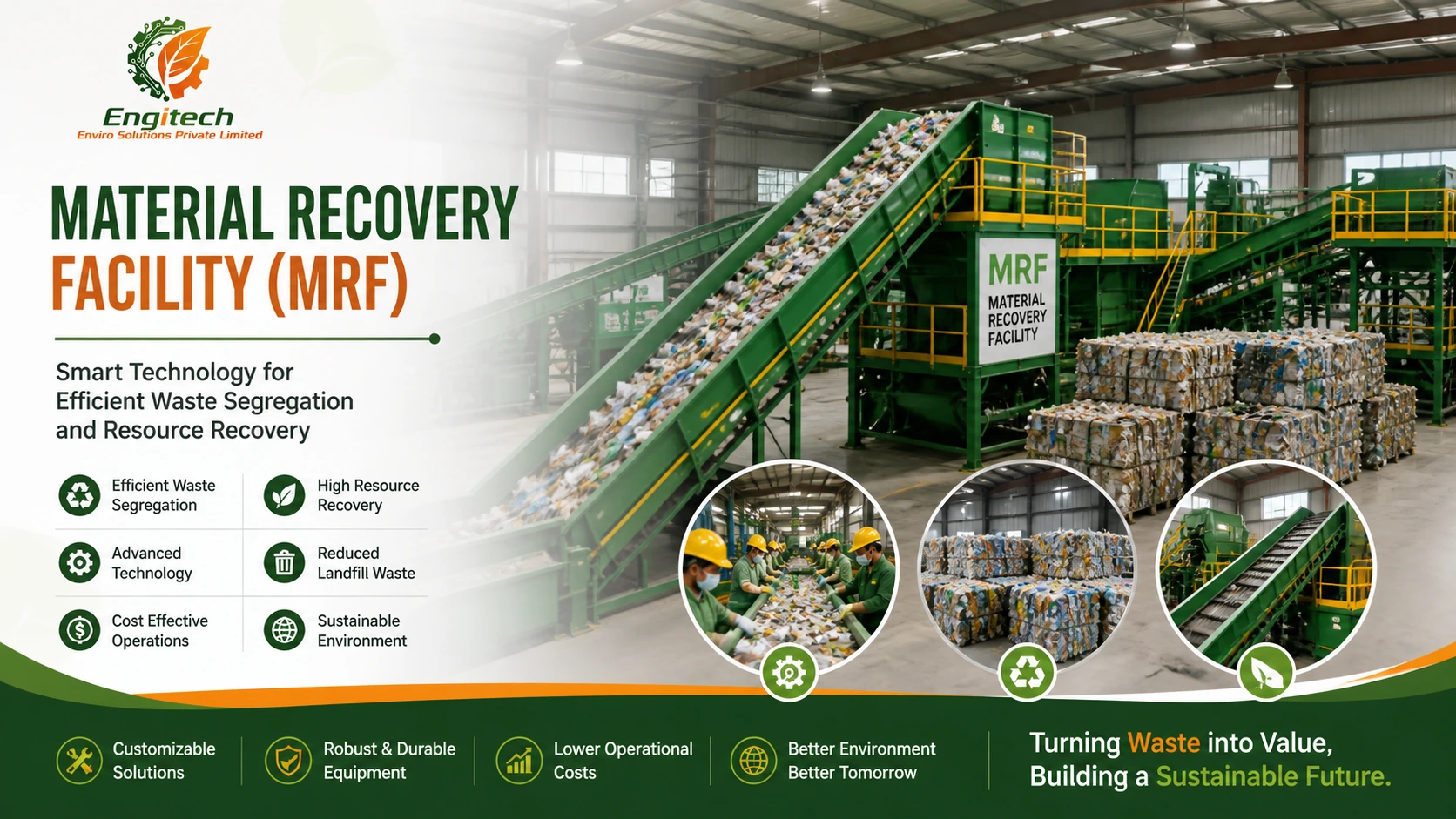
A material recovery facility (MRF) is a facility that separates solid waste into different categories of materials, including plastics, metals, paper, and glass. The facility processes these materials before sending them to recycling.
The material recovery facility’s meaning shows that the facility exists to extract valuable materials from waste that would be thrown away. The term material recovery facility has a Hindi translation that people search for because it shows the facility’s function to extract useful materials from waste.
What Is MRF Meaning in Waste Management?
Questions are often raised about the meaning of MRF in waste management. MRF is an acronym for Material Recovery Facility, which is an environmentally friendly plant used for separating, processing, and recovering reusable materials from waste.
The main purpose of an MRF waste management process is the optimization of resource recovery processes while reducing the volume of waste deposited into landfills. The materials that can be recovered through this process include plastics, metals, papers, cardboards, glass, and many others, which are sorted with the help of machinery and technology.
In short, the MRF’s meaning can be defined as a waste management plant where reusable materials are separated and processed.
What is MRF in Waste Management?
MRF is an abbreviation for Material Recovery Facility. An MRF refers to a specific type of facility that is used for sorting and recycling waste materials from municipal solid waste. In today’s waste management system, the MRF serves as a very important component that contributes to the reduction of waste deposited in the landfill sites while increasing recycling efficiency. It should be noted that the main aim of the MRF is to segregate the valuable recyclable products, including paper, plastics, metals, glass, and cardboard.
In recent years, the significance of the MRF facility has increased as many municipalities face difficulties in waste disposal because of increasing amounts of municipal solid waste. In particular, at the MRF facility, the waste materials are accepted and segregated using different methods. The use of advanced technologies, including conveyor belts, magnetic separators, and optical sorting equipment, increases recovery rates.
Reduction of pollution in the environment is among the significant advantages of implementing MRF in solid waste management. By separating the materials that can be recycled and preventing them from reaching landfills, MRF contributes to environmental protection through conservation of natural resources, emission reductions of greenhouse gases, and the circular economy. Moreover, such facilities provide jobs and facilitate cost-efficient waste management strategies.
In contemporary society, an MRF facility forms the core of successful recycling activities. With MRFs, it becomes possible for waste management businesses and authorities to maximize resource recovery and cut back expenses associated with the disposal of waste. In today’s world, where sustainability has become a key issue, the importance of MRF facilities only keeps growing.
Why Are MRFs Important in Waste Management?
The importance of a material recovery facility (MRF) cannot be overstated. With increasing urbanization and industrialization, waste generation is rising rapidly. Without proper segregation, valuable resources are lost.
Key roles of MRFs include:
- Reducing landfill waste
- Recovering recyclable materials
- Supporting the circular economy
- Minimizing environmental pollution
- Promoting sustainable waste management practices
At Engitech Enviro, we design systems that maximize recovery efficiency while ensuring eco-friendly operations.
Material Recovery Facility (MRF) – Specifications
| Parameter | Specification Details |
|---|---|
| Plant Type | Material Recovery Facility (MRF) |
| Processing Capacity | 5 TPD – 500 TPD (Customized) |
| Input Material | Municipal Solid Waste / Dry Waste / Mixed Waste |
| Segregation Method | Manual + Automatic |
| Power Requirement | 15 kW – 250 kW (Depending on capacity) |
| Automation Level | Semi-Automatic / Fully Automatic |
| Main Equipment | Trommel, Conveyor, Magnetic Separator, Air Classifier |
| Material Handling System | Belt Conveyors / Chain Conveyors |
| Sorting Efficiency | Up to 90–95% |
| Recyclable Output | Plastic, Paper, Metal, Glass |
| RDF Output | Yes (Optional) |
| Baling System | Hydraulic Baler (Optional) |
| Space Requirement | 500 sq. ft. – 5000+ sq. ft. |
| Installation Time | 15 – 45 Days |
| Operation Mode | Continuous |
How Does a Material Recovery Facility Work?
A material recovery facility follows a systematic process to separate and process waste:
- Waste Collection – Mixed waste is collected from residential, commercial, and industrial sources
- Segregation – Waste is sorted using manual and automated systems
- Processing – Materials are cleaned, shredded, or compacted
- Recovery – Recyclable materials are extracted and sent for reuse
- Disposal – Non-recyclable waste is safely disposed of
This structured workflow ensures maximum recovery of valuable materials.
MRF Meaning in Construction and Infrastructure
The term MRF meaning in construction, is slightly different but related. In construction projects, MRFs are used to manage and recycle construction and demolition waste such as concrete, wood, metal, and debris.
This helps:
- Reduce construction waste
- Promote reuse of materials
- Lower project costs
- Support green building practices
Material Recovery Facility Design and Setup
An efficient material recovery facility design is crucial for achieving high performance and productivity. At Engitech Enviro, we focus on designing facilities that are both efficient and scalable.
Key elements of MRF design include:
- Waste receiving and storage area
- Segregation systems (manual & automated)
- Conveyor belts for material flow
- Sorting equipment like trommels and separators
- Baling and compaction units
- Environmental control systems
A well-planned design ensures smooth operations, reduced downtime, and maximum output.
Types of Material Recovery Facilities
There are mainly two types of materials recovery facility systems:
1. Clean MRF
- Processes already segregate waste
- Higher efficiency and better output
2. Dirty MRF
- Handles mixed waste
- Requires advanced sorting technologies
Both types play a significant role depending on the waste management system in place.
Benefits of Material Recovery Facility (MRF)
Implementing a material recovery facility (MRF) offers numerous advantages:
- Efficient waste segregation
- Recovery of valuable recyclable materials
- Reduction in landfill usage
- Lower environmental impact
- Cost-effective waste management
- Support for sustainable development
Dirty Material Recovery Facility
A dirty MRF handles mixed municipal waste directly without source segregation. These facilities use advanced machinery to separate recyclable materials from general waste.
Dirty MRF systems are widely used in urban waste management projects.
Hybrid Material Recovery Facility
Hybrid systems combine both clean and dirty waste processing technologies. These advanced facilities improve flexibility and maximize recycling output.
Importance of MRF Recycling in Modern Waste Management
The demand for MRF recycling systems is increasing globally because of rising waste generation and stricter environmental regulations.
Reduces Landfill Waste
A modern mrf plant significantly reduces the amount of waste sent to landfills by recovering reusable materials.
Conserves Natural Resources
Recycling recovered materials helps reduce dependence on raw material extraction and mining activities.
Improves Environmental Sustainability
Efficient waste segregation lowers pollution levels and supports cleaner urban environments.
Supports Circular Economy
Recovered materials can be reused in manufacturing industries, reducing production costs and environmental impact.
Generates Employment
Modern recycling and material facility recovery systems create employment opportunities in waste management and recycling industries.
Equipment Used in MRF Plants
A modern MRF plant uses several advanced technologies for effective waste processing.
Conveyor Systems
Conveyors transport waste materials through different sorting stages.
Magnetic Separators
These systems remove ferrous metals from mixed waste streams.
Trommel Screens
Rotating screens separate waste materials according to size.
Air Classifiers
Air systems separate lightweight materials such as paper and plastic films.
Optical Sorting Machines
Advanced sensors identify and separate different plastic materials automatically.
Balers
Balers compress recyclable materials into compact bundles for transportation and storage.
Applications of Material Recovery Facility Systems
A material recovery facility is used across various industries and municipal projects.
Municipal Waste Management
Cities use MRF systems to process household and commercial waste efficiently.
Industrial Recycling
Manufacturing industries use recycling facilities to recover valuable production waste.
Plastic Recycling
MRF systems help separate and process different plastic materials for reuse.
Construction Waste Management
Demolition waste containing metals, concrete, wood, and plastics can be processed through recovery facilities.
Commercial Waste Recycling
Shopping malls, offices, and commercial complexes use MRF systems for efficient waste segregation.
Challenges Faced by MRF Waste Management Systems
Although MRF technology offers major advantages, recycling facilities also face operational challenges.
Mixed Waste Contamination
Improper source segregation can reduce recycling efficiency and increase processing costs.
High Operational Costs
Advanced sorting equipment and automation systems require significant investment.
Market Demand Fluctuation
Prices of recyclable materials often vary depending on market demand.
Maintenance Requirements
Continuous operation of sorting machinery requires regular maintenance and technical support.
Future of Material Recovery Facilities
The future of MRF waste management is becoming more advanced with the integration of automation, robotics, and artificial intelligence.
Modern facilities are now adopting:
- AI-based waste sorting systems
- Smart recycling technologies
- Automated robotic separators
- Advanced sensor-based material identification
- Energy-efficient recovery systems
These innovations are improving recycling accuracy, increasing recovery rates, and supporting sustainable waste management practices worldwide.
Why Choose Engitech Enviro for Waste Management Solutions?
Engitech Enviro is dedicated to providing innovative environmental and recycling solutions tailored specifically for today’s waste management industry. We specialize in offering technologies that ensure efficiency, reliability, and sustainability.
Why Industries Trust Engitech Enviro
- Advanced recycling technology solutions
- Efficient waste segregation systems
- Reliable industrial equipment
- Sustainable environmental practices
- Customized waste management solutions
- Professional technical support
Final Thoughts
The material recovery facility (MRF) operates as a waste processing facility but functions as an essential element that supports sustainable development. Businesses and municipalities can enhance their waste management operations through their understanding of MRF functions and their implementation of contemporary recycling systems.
Proper waste management methods and advanced technological solutions enable the conversion of waste materials into useful resources, which helps decrease environmental harm while supporting a circular economy. Engitech Enviro maintains its position as an industry leader through its development of advanced technologies that optimize waste separation processes and material recovery operations.
A material recovery facility plays a critical role in modern recycling and waste management systems. From waste segregation to resource recovery, these advanced facilities help industries and municipalities reduce landfill waste, conserve natural resources, and support sustainable environmental practices.
Understanding the MRF meaning in waste management helps organizations adopt smarter recycling solutions that improve operational efficiency and environmental responsibility. Whether it is a small MRF center or a large industrial MRF plant, modern recovery systems are essential for building a cleaner and greener future.