Nowadays waste management has become one of the most important challenges in a rapidly growing world. With increasing population, urbanization, and industrial activities, the amount of waste generated every day is rising at an alarming rate and this creates a hazardous situation. Proper waste management is not just about keeping our surroundings clean; it plays a vital role in protecting the environment, conserving resources, and ensuring a healthy life for present and future generations.
What Is Waste Management?
Waste management refers to the systematic process of collecting, segregating, transporting, treating, recycling, and disposing of waste materials in a safe and sustainable manner. It includes managing different types of waste such as household waste, industrial waste, biomedical waste, e-waste, and organic waste. When done correctly, waste management reduces pollution and promotes resource recovery.
Importance of Waste Management
1. Protects the Environment
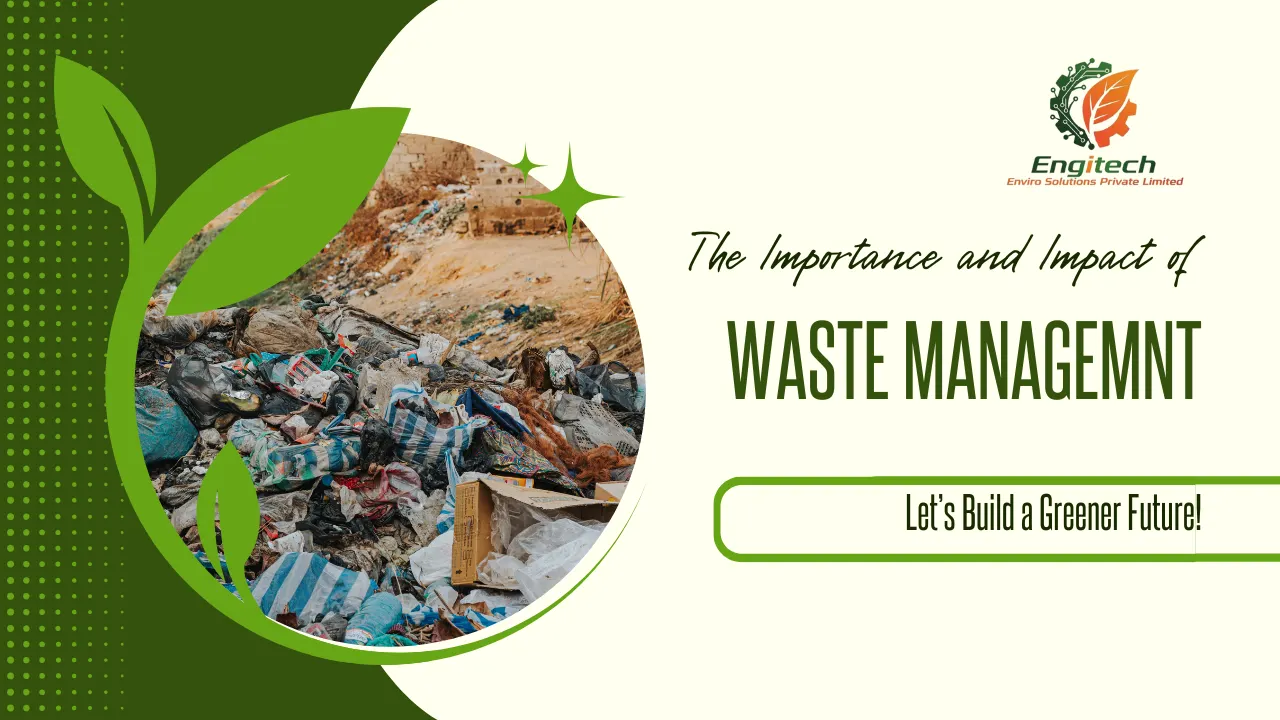
Improper disposal of waste leads to air, water, and soil pollution. Open dumping and burning of waste release harmful gases and toxic substances into the environment. Effective waste management helps reduce pollution, protects natural ecosystems, and maintains environmental balance.
2. Improves Public Health
Unmanaged waste becomes a breeding ground for bacteria, insects, and rodents, which can cause serious diseases. Proper waste collection and treatment reduce health risks and improve overall hygiene in residential and commercial areas.
3. Conserves Natural Resources
Recycling and reusing waste materials help conserve valuable natural resources such as metals, water, and energy. By reducing the need for raw materials, waste management supports sustainable development and lowers environmental stress.
4. Reduces Landfill Burden
Landfills occupy large areas of land and take years to decompose waste. Scientific waste management practices such as composting and recycling significantly reduce the amount of waste sent to landfills, saving land and reducing long-term environmental damage.
Impact of Effective Waste Management
1. Supports a Circular Economy
Modern waste management focuses on turning waste into resources. Organic waste can be converted into compost, while recyclable materials can be reused in manufacturing. This approach supports a circular economy where waste is minimized and value is recovered.
2. Helps in Climate Change Control
Poor waste handling releases greenhouse gases like methane, contributing to climate change. Efficient waste processing systems reduce emissions and promote eco-friendly practices that help combat global warming.
3. Enhances Urban Living
Clean cities attract better living standards, tourism, and business opportunities. Proper waste management improves the visual appeal of cities and creates a healthier environment for citizens.
Waste Management and Recycling
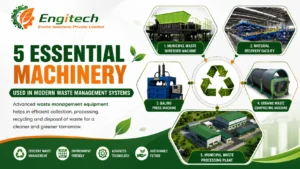
Waste management and recycling is an important process to maintain a clean and sustainable environment. Proper waste management involves the collection, segregation, treatment, and safe disposal of waste, while recycling focuses on converting waste materials into reusable resources. Waste Management and Recycling help reduce pollution, conserve natural resources, and minimize the burden on landfills.
Recycling materials such as paper, plastic, metal, and organic waste saves energy and reduces the need for raw material extraction. Effective waste management systems also improve public health by preventing the spread of diseases and controlling environmental contamination. By adopting responsible waste handling and recycling practices, we can create a sustainable and healthy environment for living. Engitech Enviro, contribute with their efficient waste management solution machines for communities and industries so that they can move toward a cleaner, greener, and more sustainable future.
Need of Waste Management
Effective waste management helps prevent air, water, and soil pollution caused by improper disposal. It reduces health risks by controlling the spread of diseases and harmful bacteria. Waste management also supports recycling and reuse, which conserves natural resources and reduces the burden on landfills.
Additionally, proper waste management helps control greenhouse gas emissions, supports environmental sustainability, and improves the overall quality of life. By adopting systematic waste management practices, communities and industries can protect the environment and ensure a safer future for generations to come.
Engitech Enviro’s Contribution to Sustainable Waste Management
Engitech Enviro is a trusted name in the waste management industry, offering advanced solutions such as organic waste composting machines and waste processing equipment. Our systems are designed to reduce waste volume, control odor, and convert organic waste into useful compost. By focusing on sustainability and performance, Engitech Enviro supports businesses and communities in achieving cleaner surroundings and responsible waste disposal.
Conclusion
The importance and impact of waste management cannot be ignored in today’s world. It is essential for environmental protection, public health, resource conservation, and sustainable development. With the support of modern technology and experienced solution providers like Engitech Enviro, waste can be managed efficiently and transformed into a valuable resource. Adopting proper waste management practices today will ensure a cleaner, healthier, and greener future for generations to come.