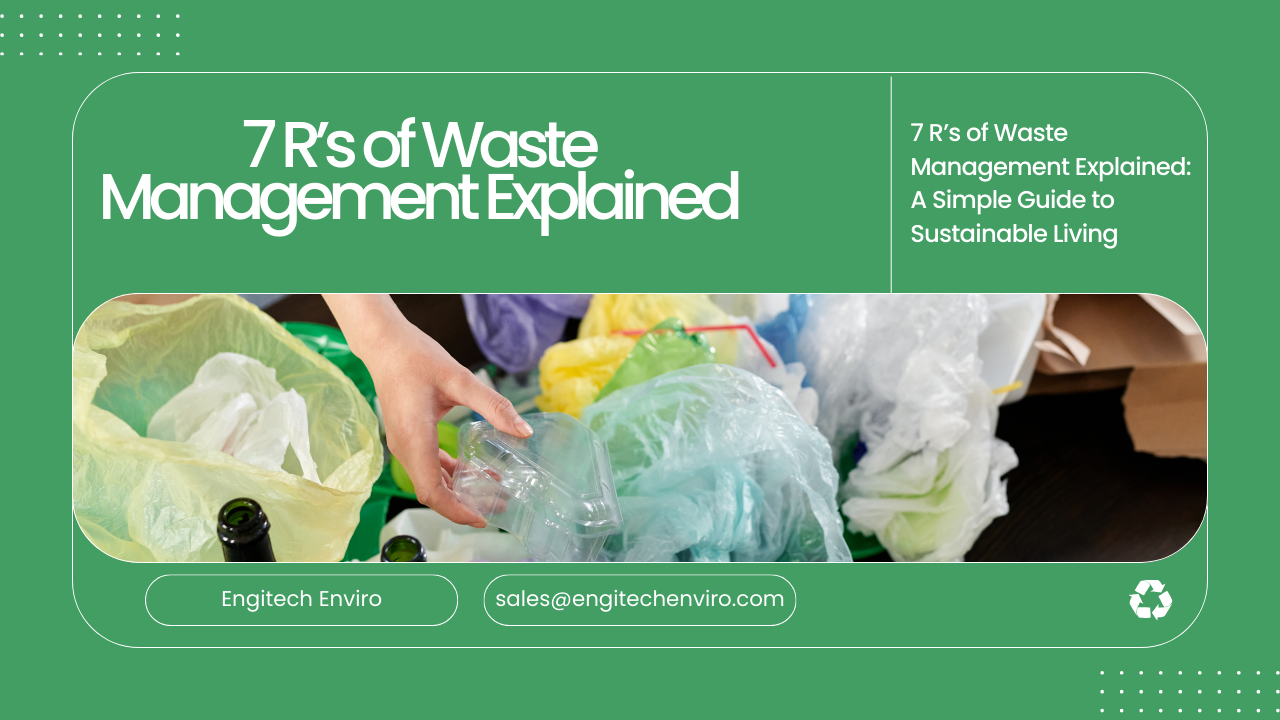
Today, the world’s environment is facing its most serious environmental crisis as waste disposal has reached a critical level. Daily waste generation is increasing as people throw away both regular garbage and commercial waste. Protecting the environment through responsible waste management practices helps us build a sustainable future. The 7 R’s of Waste Management Explained: A Simple Guide to Sustainable Living provides individuals, businesses, and the industrial sector with the necessary information to implement sustainable waste management practices.
The 7 R’s framework provides a practical approach to reducing waste, conserving natural resources, and reducing environmental pollution. The principles of this system help people make better choices that protect the environment, while also saving money and achieving greater impact.
The company Engitech Enviro manufactures advanced waste management systems, which help companies implement sustainable operations through its modern equipment and technology solutions for waste processing and recycling.
This guide will explain the 7 R’s, their operational processes, and their benefits in creating a sustainable environment.
What Are the 7 R’s of Waste Management?
The 7 R’s of waste management are a set of principles designed to reduce waste generation and promote responsible resource use. These principles guide individuals and industries to rethink their consumption habits and adopt sustainable practices.
The 7 R’s include:
- Rethink
- Refuse
- Reduce
- Reuse
- Repair
- Recycle
- Rot (Compost)
Each “R” represents a step toward minimizing waste and improving environmental sustainability. When applied together, they create a powerful strategy for waste reduction.
1. Rethink – Change the Way We Consume
The first step to sustainable living is to rethink our lifestyle and consumption habits. Many people purchase products without considering their environmental impact. The process of reducing waste begins when we carefully examine our purchasing needs.
The first option allows us to purchase products that break down after a single use, while the second option allows us to choose products that last longer and protect the environment. Companies have the ability to transform their manufacturing operations by adopting methods such as reducing packaging, using recycled materials, and adopting better resource management techniques.
The process of developing sustainable waste management methods begins when individuals and businesses examine their decision-making processes.
2. Refuse – Say No to Unnecessary Waste
The second principle is refuse, which means avoiding products that create waste or environmental harm. Many everyday items, such as plastic bags, disposable cutlery, and single-use packaging, contribute significantly to landfill waste.
Refusing these items helps reduce waste generation at the source.
Examples of refusing waste include:
- Saying no to plastic bags and using cloth bags
- Avoiding single-use plastic bottles
- Refusing excessive packaging
- Choosing eco-friendly products
This small behavior change can significantly reduce the amount of waste entering the environment.
3. Reduce – Minimize Waste Production
Reducing waste is one of the most effective ways to protect the environment. The reduce principle encourages people to use fewer resources and generate less waste.
Simple steps to reduce waste include:
- Buying only what is necessary
- Choosing products with minimal packaging
- Using digital documents instead of paper
- Conserving energy and water
Industries can also reduce waste by optimizing manufacturing processes and improving material efficiency. Waste reduction not only benefits the environment but also helps save money and resources.
4. Reuse – Extend Product Life
The concept of reuse focuses on using products multiple times instead of discarding them after a single use. Reusing items helps reduce the demand for new products and prevents unnecessary waste.
Examples of reuse include:
- Reusing glass jars and containers
- Donating old clothes or furniture
- Using refillable water bottles
- Repurposing packaging materials
By extending the life of products, we reduce the need for raw materials and lower the overall environmental impact.
5. Repair – Fix Instead of Throwing Away
Nowadays, people throw away products that are beyond their useful life. The repair approach creates the expectation that people will fix their broken items rather than opt for replacement products.
Repairing products like electronics, appliances, and furniture can significantly reduce waste. This approach saves money and fosters a sustainable culture.
Many communities are now promoting repair workshops and service centers to encourage people to have things repaired instead of throwing them away.
6. Recycle – Convert Waste into New Resources
Recycling is one of the most widely known waste management practices. It involves converting waste materials into new products, reducing the need for raw materials, and conserving natural resources.
Common recyclable materials include:
- Paper and cardboard
- Plastic
- Glass
- Metals
Proper recycling requires waste segregation at the source. When individuals separate biodegradable and non-biodegradable waste, recycling becomes more efficient and effective.
Advanced recycling technologies and waste processing equipment are essential for improving recycling efficiency. Companies like Engitech Enviro contribute to this process by providing modern waste management systems that support recycling and sustainable waste handling.
7. Rot – Compost Organic Waste
The final “R” in the waste management hierarchy is rot, which refers to composting biodegradable waste. Organic waste such as food scraps, vegetable peels, and garden waste can be converted into compost.
Composting provides several benefits:
- Reduces landfill waste
- Improves soil fertility
- Supports sustainable agriculture
- Decreases greenhouse gas emissions
Instead of sending organic waste to landfills, composting transforms it into valuable fertilizer that can be used in gardens and farms.
Importance of the 7 R’s in Modern Waste Management
The 7 R’s of waste management provide a practical framework for tackling the global waste crisis. As urban populations grow and consumption increases, waste management becomes more challenging.
By applying these principles, societies can:
- Reduce landfill waste
- Conserve natural resources
- Lower pollution levels
- Promote sustainable consumption
Organizations like Engitech Enviro are helping industries and municipalities adopt better waste management practices through advanced equipment and innovative environmental solutions.
Benefits of Following the 7 R’s of Waste Management
Adopting the 7 R’s of Waste Management Explained: A Simple Guide to Sustainable Living offers numerous benefits for individuals, communities, and industries.
1. Environmental Protection
The 7 R’s help reduce pollution, conserve natural resources, and protect ecosystems.
2. Reduced Landfill Waste
By minimizing waste generation and promoting recycling, less waste ends up in landfills.
3. Energy Conservation
Recycling and reusing materials require less energy compared to producing new products from raw materials.
4. Cost Savings
Reducing and reusing resources helps individuals and businesses save money.
5. Sustainable Resource Use
The 7 R’s encourage responsible use of natural resources, ensuring availability for future generations.
6. Improved Waste Management Systems
Proper waste segregation and recycling support efficient waste management operations.
7. Lower Carbon Footprint
Reducing waste and recycling materials helps decrease greenhouse gas emissions.
8. Promotes Eco-Friendly Lifestyle
The 7 R’s encourage individuals to adopt environmentally responsible habits.
9. Supports Circular Economy
Instead of discarding products, materials are reused and recycled within the system.
10. Encourages Innovation
Sustainable waste management promotes the development of new technologies and environmental solutions.
How Individuals Can Apply the 7 R’s in Daily Life
Anyone can contribute to sustainable living by practicing the 7 R’s. Some simple steps include:
- Carry reusable shopping bags
- Avoid single-use plastics
- Repair broken items instead of replacing them
- Compost kitchen waste
- Donate or recycle unwanted items
These small changes can collectively create a big positive impact on the environment.
Role of Technology in Waste Management
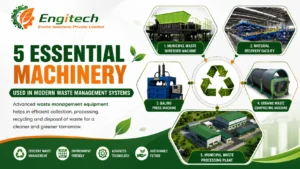
Advances in technology today support waste management operations through their use in waste control processes. The combination of advanced machinery and waste processing systems allows for efficient waste collection, including waste treatment and recycling operations.
Engitech Enviro and other companies are dedicated to developing sustainable waste management solutions that help industries and municipalities protect the environment through responsible waste disposal operations.
The combination of current technology solutions and environmentally friendly methods helps organizations convert their waste materials into valuable resources while minimizing their negative impact on nature.
Conclusion
Understanding the 7 R’s of Waste Management: A Simple Guide to Sustainable Living is essential to creating a cleaner and more sustainable future. The seven principles of Rethink, Refuse, Reduce, Reuse, Repair, Recycle, and Rot provide a practical guide to help people reduce waste and conserve natural resources.
Adopting these practices by individuals, businesses, and industries reduces pollution, protects ecosystems, and creates an efficient circular economy system.
Engitech Enviro and other organizations are essential to advancing responsible waste management through their innovative waste management technologies and eco-friendly recycling solutions.