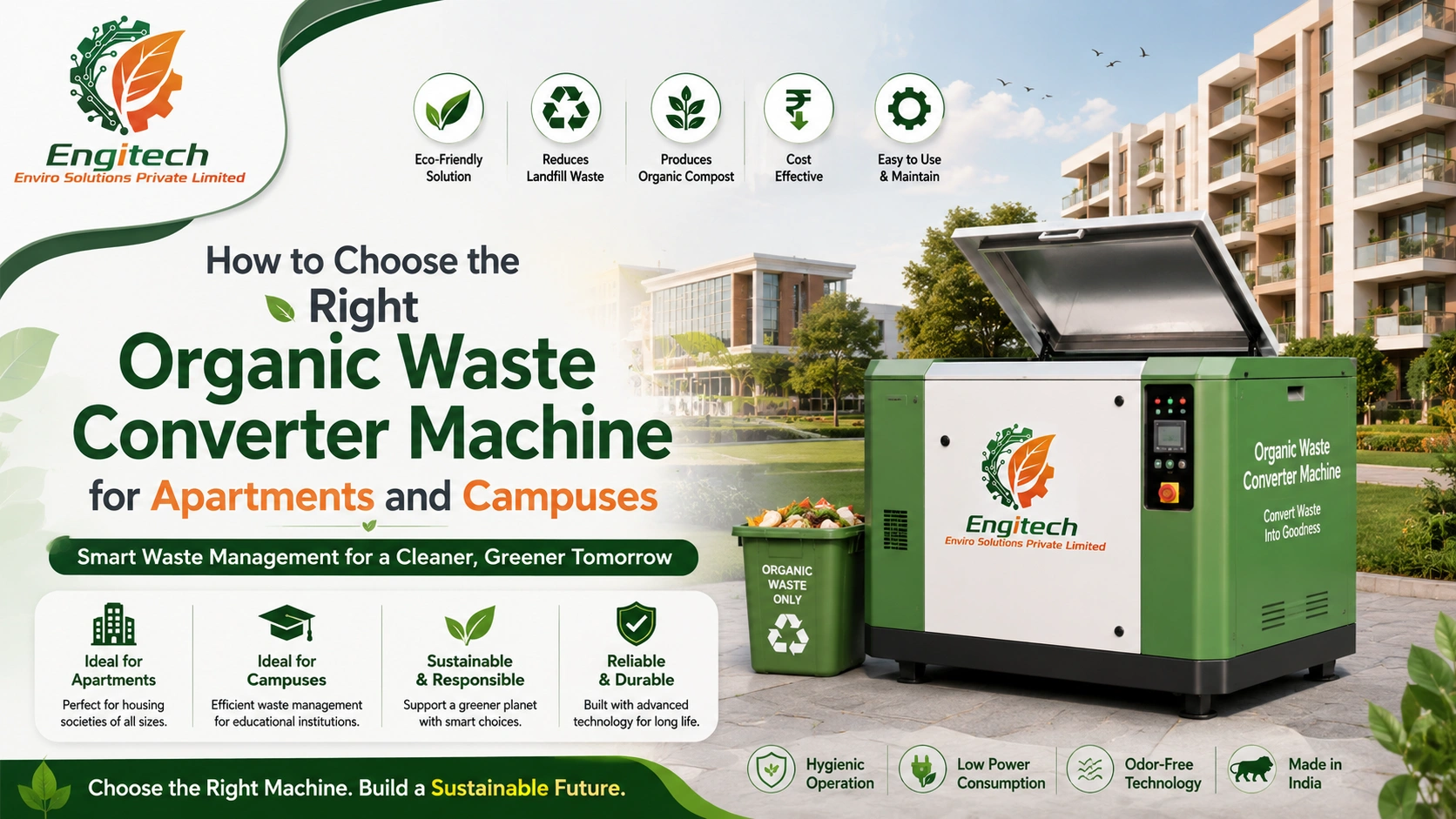
In light of urbanization and growing worries related to the proper disposal of garbage, residential societies, schools, colleges, and commercial buildings are now actively looking at various options when it comes to adopting eco-friendly approaches to deal with waste disposal. The best way to manage biodegradable waste is to install an organic waste converter machine for apartments and large residential areas. Engitech Enviro realizes the significance of managing organic waste properly and assists organizations in implementing green waste management practices.
The major proportion of municipal solid waste includes food waste, garden waste, and biodegradable waste. Rather than transporting them to the landfill site, these wastes can be treated using a proper organic waste converter machine, which will convert them into organic compost used in landscaping and gardening works. Regardless of whether you plan to install one in a housing society, educational institute, or commercial building, the selection of a machine depends on a thorough analysis.
Here, we describe all the things you need to know about buying the best organic waste converter machine.
Why Organic Waste Management Matters
Decomposition of organic waste in the landfill produces significant levels of emissions. The breakdown of the food waste material and other organic waste creates methane gas, which is a major contributor to global warming.
Using the organic waste converter in the apartments will help in processing the waste in place and producing useful compost while reducing the cost of transportation of waste. Current legislation on waste management also encourages the use of owc in construction projects for sustainable development.
Provisions for facilities for owc room has been incorporated by many urban developers as part of their waste management plan. The integration of owc in the construction plan also helps to attain environmental clearance certifications.
Understanding an Organic Waste Converter Machine
An organic waste converter for apartments is a specialized machine designed to convert biodegradable waste into compost through controlled biological decomposition.
These systems can process:
- Food waste
- Fruit and vegetable scraps
- Garden waste
- Canteen waste
- Hostel kitchen waste
- Restaurant waste
- Campus cafeteria waste
The rise in the use of owc in the development of buildings is due to the benefits of the system in reducing dependence on landfills and encouraging waste recycling.
An appropriately built owc room is characterized by sufficient ventilation, drainage, and ample space for composting to be successful. Architects are known to include owc within buildings during planning stages to facilitate its implementation.
Key Factors to Consider Before Buying an Organic Waste Converter
1. Waste Generation Capacity
The first step in selecting an organic waste converter for apartments is understanding daily waste generation.
For example:
- Small apartments: 25–100 kg/day
- Medium housing societies: 100–300 kg/day
- Large campuses: 300–1000 kg/day
- Universities and institutions: 1000+ kg/day
This will help ensure that the owc in building will not be overwhelmed by excess waste on a day-to-day basis.
While setting up the installation site, it is essential to ensure that the room for owc can provide space for further capacity increases. Nowadays, most builders consider waste generation projections while planning the construction sites.
2. Available Installation Space
Space availability plays a major role in machine selection.
A dedicated owc room should have:
- Adequate ventilation
- Water supply
- Electrical connection
- Drainage facilities
- Easy access for waste collection
A well-designed owc room improves operational efficiency and simplifies maintenance procedures.
When integrating owc in building projects, developers often allocate designated waste management zones to ensure compliance with environmental regulations. Proper space planning during owc in construction of a new building prevents future operational challenges.
3. Automation Level
Modern organic waste converter for apartments systems are available in manual, semi-automatic, and fully automatic variants.
Benefits of automation include:
- Reduced labor requirements
- Faster composting cycles
- Consistent compost quality
- Improved hygiene
Large campuses frequently choose automated systems because they simplify waste processing operations. Integrating advanced technologies into owc in building infrastructure improves overall sustainability performance.
A modern owc room equipped with automated machinery ensures smooth day-to-day operation and better waste handling efficiency.
4. Composting Time
Different machines offer varying composting durations.
An efficient organic waste converter for apartments should provide:
- Rapid decomposition
- Odor control
- High-quality compost output
- Energy-efficient operation
Developers implementing owc in construction projects should compare machine performance before finalizing procurement decisions.
Proper environmental controls inside the owc room can significantly improve composting efficiency and reduce nuisance issues.
Importance of OWC in Building Projects
The role of owc in building developments has become increasingly significant due to stricter waste management regulations.
Benefits of owc in building include:
- On-site waste processing
- Reduced landfill burden
- Lower waste transportation costs
- Improved environmental compliance
- Better community sustainability ratings
Many municipalities encourage owc in building projects as part of green building certification requirements.
The integration of owc in building infrastructure also enhances property value and demonstrates environmental responsibility.
Planning the Ideal OWC Room
A properly designed owc room is essential for efficient operation.
Important considerations include:
- Adequate floor space
- Ventilation systems
- Safety provisions
- Drainage arrangements
- Access pathways
A dedicated owc room minimizes operational disruptions and supports long-term machine performance.
Many successful installations rely on a strategically located owc room that enables easy waste collection from multiple buildings.
A well-maintained owc room also helps maintain hygiene standards while reducing odor-related concerns.
Why OWC in Construction Planning Is Essential
The inclusion of owc in construction plans is becoming a standard requirement for modern infrastructure projects.
Benefits of integrating owc in construction include:
- Easier installation
- Reduced retrofitting costs
- Better utility planning
- Regulatory compliance
- Enhanced sustainability ratings
Architects increasingly incorporate owc in construction designs to support environmentally responsible developments.
By considering owc in construction during the initial planning phase, developers can optimize space utilization and avoid costly modifications later.
Proper planning for owc in construction also ensures seamless integration with drainage, electrical, and waste collection systems.
Best Applications for Organic Waste Converter Machines
An organic waste converter for apartments is ideal for:
Residential Societies
Housing communities generate substantial food waste daily, making an organic waste converter for apartments an effective solution.
Educational Campuses
Universities and schools benefit from an organic waste converter for apartments by managing cafeteria and hostel waste efficiently.
Corporate Campuses
Large organizations can reduce environmental impact through composting and sustainable waste management.
Mixed-Use Developments
Projects incorporating owc in building infrastructure can efficiently manage waste from residential and commercial occupants.
Maintenance and Operational Tips
To maximize machine performance:
- Segregate waste properly.
- Avoid non-biodegradable contamination.
- Maintain the machine regularly.
- Monitor moisture levels.
- Train staff adequately.
A well-managed owc room contributes significantly to operational efficiency and compost quality.
Developers who prioritize owc in construction planning often experience lower maintenance costs due to better infrastructure design.
Environmental Benefits of Organic Waste Converter Machines
Using an organic waste converter for apartments provides numerous environmental advantages:
- Reduced landfill waste
- Lower greenhouse gas emissions
- Compost production
- Resource conservation
- Improved community sustainability
The growing adoption of owc in building projects reflects the increasing importance of sustainable waste management practices.
Well-designed owc room facilities further enhance environmental performance by supporting efficient waste processing operations.
Similarly, integrating owc in construction helps future-proof developments against evolving environmental regulations.
Conclusion
Choosing the correct organic waste converter for your apartment calls for the consideration of factors such as the capacity for producing organic waste, automation levels, and space considerations, among others. Sustainability is increasingly becoming the major priority when it comes to organic waste management, hence the need to integrate the OWC systems into building constructions, plan an appropriate OWC room, and incorporate OWC into building designs.
At Engitech Enviro, we have the solutions needed by residential societies, schools, and commercial centers to effectively manage their organic wastes through technology-driven systems. By opting for the best organic waste converters for your apartment, you are sure to turn your waste into useful resources for yourself and the environment.