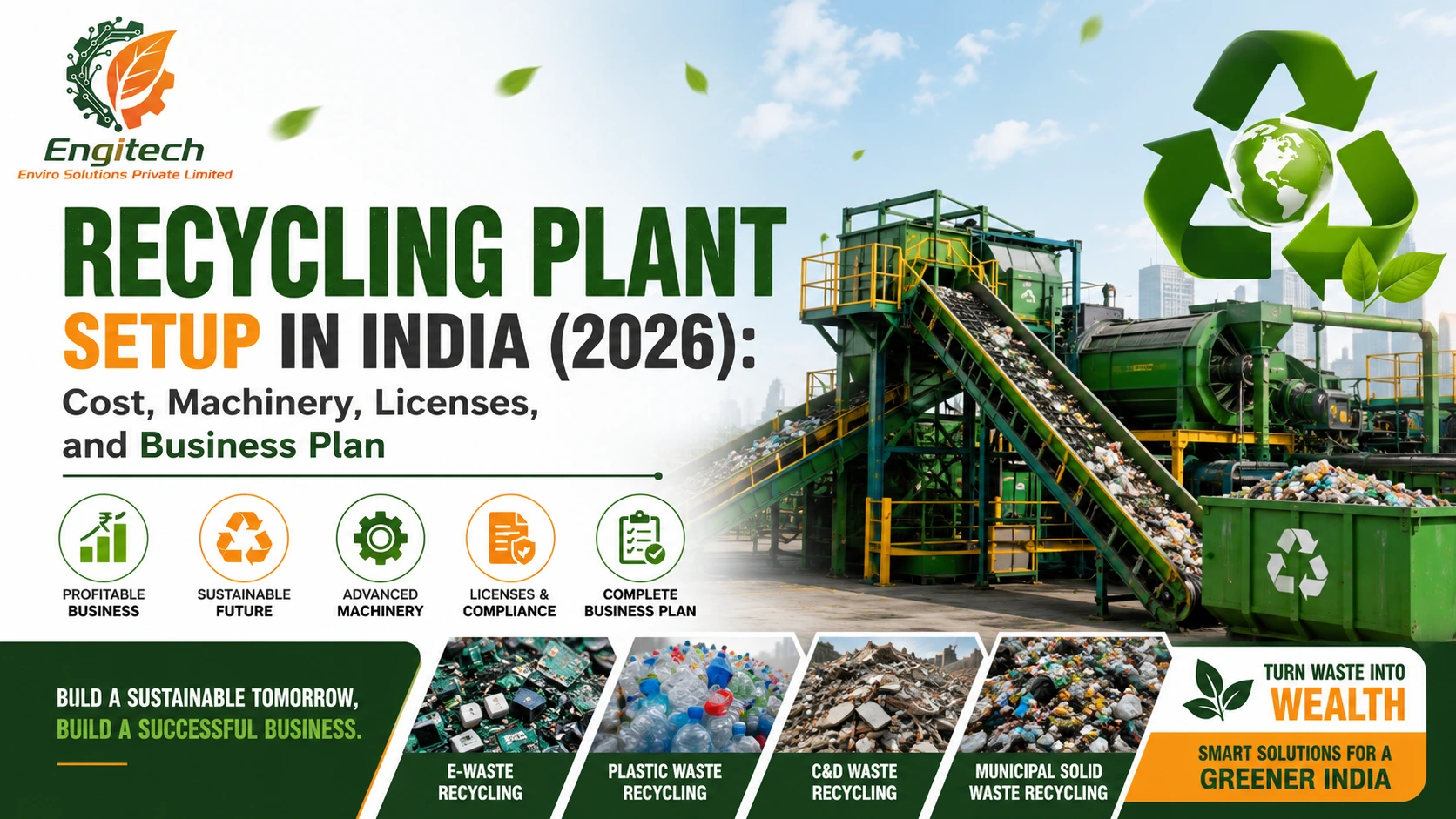
India is progressing fast towards the circular economy concept, and the recycling industry can be considered one of the most lucrative business sectors in 2026. In the wake of increasing urbanization, industrialization, and stringent environmental laws, there is a growing need for modern solutions of waste recycling plants among municipalities, industries, commercial units, and private entrepreneurs. Apart from being an environmentally sustainable step, setting up the recycling-plant can also be a profitable venture for you in the long run by virtue of material recovery.
If you are planning to set up e waste recycling plant, plastic waste recycling plant, or construction & demolition waste recycling plant, you should know about the cost involved in setting up such recycling plants, the machinery required, licensing issues, and business planning aspects. No recycling-plant can start without proper planning, modern machinery, and adherence to environmental laws.
Engitech Enviro can help you with waste management and recycling solutions with advanced technologies, custom plant designs, and engineering services.
Why Invest in a Recycling Plant in India?
India creates millions of tonnes of MSW, plastic waste, electronic waste, and construction waste every year. The government’s various programs like “Swachh Bharat Mission”, “Extended Producer Responsibility” (EPR), and waste management policies have created a huge demand for recycling plants in India.
Key advantages include:
- Growing demand for recycled materials
- Government support for sustainable businesses
- High return on investment
- Continuous availability of recyclable waste
- Employment generation
- Environmental protection
- Lower landfill dependency
- Long-term business growth opportunities
Types of Recycling Plants in India
Different industries require specialized recycling systems based on the type of waste being processed.
1. Plastic Waste Recycling Plant
A plastic waste recycling plant converts plastic waste into reusable raw materials through sorting, washing, shredding, drying, and granulation.
Suitable for recycling:
- PET bottles
- HDPE containers
- LDPE films
- PP materials
- Industrial plastic waste
Many entrepreneurs evaluate the plastic waste recycling plant cost before starting operations, as the investment depends on plant capacity, machinery quality, automation level, and land requirements.
2. E Waste Recycling Plant
Electronic waste is one of the fastest-growing waste streams worldwide.
An e-waste recycling facility processes:
- Computers
- Mobile phones
- Printed circuit boards
- Batteries
- Electrical appliances
- Consumer electronics
Many investors search for the e waste recycling plant setup cost in India before planning their project. The e waste recycling plant cost varies according to processing capacity, technology, pollution control systems, and automation.
3. C&D Waste Recycling Plant
A C&D waste recycling plant processes demolition and construction debris into reusable aggregates and building materials.
Typical C&D waste includes:
- Concrete
- Bricks
- Asphalt
- Stones
- Tiles
- Sand
- Cement blocks
Modern C and D waste recycling systems reduce landfill disposal while producing reusable construction materials for infrastructure projects.
4. Municipal Solid Waste Recycling Plant
These plants process mixed municipal waste by separating recyclable materials, compostable waste, and RDF (Refuse-Derived Fuel).
Machinery Required for a Waste Recycling Plant
Selecting advanced machinery is essential for achieving higher productivity, lower operational costs, and better material recovery.
Common machinery includes:
Waste Segregation System
Separates recyclable materials efficiently.
Conveyor Belts
Ensure smooth movement of waste throughout the processing line.
Shredders
Reduce waste size for easier processing.
Trommel Screens
Separate waste according to particle size.
Magnetic Separators
Recover ferrous metals from mixed waste.
Air Density Separators
Separate lightweight and heavy materials.
Plastic Washing Units
Clean plastic waste before recycling.
Granulators
Convert plastic flakes into reusable granules.
Baling Machines
Compress recyclable materials for transportation and storage.
Dust Collection Systems
Maintain a clean and safe working environment.
Recycling Plant Setup Process
Setting up a waste recycling plant involves careful planning and execution.
Step 1: Market Research
Identify:
- Waste availability
- Target industries
- Competition
- Market demand
Step 2: Select Plant Location
Choose land with:
- Good road connectivity
- Water supply
- Electricity
- Industrial zoning
Step 3: Prepare Business Plan
Include:
- Investment estimate
- Machinery requirements
- Operational costs
- Revenue projections
- Risk assessment
Step 4: Obtain Government Approvals
Secure all required licenses before plant installation.
Step 5: Install Machinery
Install advanced recycling equipment with proper workflow planning.
Step 6: Hire Skilled Workforce
Recruit trained operators, engineers, and maintenance personnel.
Step 7: Start Commercial Operations
Conduct trial runs before full-scale production.
Licenses Required for Recycling Plant in India
Before establishing a recycling plant in India, businesses should obtain the necessary approvals.
Common licenses include:
- Company Registration
- GST Registration
- Factory License
- Pollution Control Board Consent
- Environmental Clearance
- Fire Safety Certificate
- Trade License
- EPR Authorization (where applicable)
- Labour Registration
- Local Municipal Approvals
Factors Affecting Recycling Plant Cost
Investment depends on several important factors.
Plant Capacity
Higher capacity requires greater investment.
Level of Automation
Automatic systems improve efficiency but increase initial cost.
Machinery Quality
Premium equipment offers better productivity and durability.
Land Cost
Industrial land prices vary by location.
Utility Infrastructure
Power supply, water systems, and drainage affect overall investment.
Pollution Control Equipment
Environmental compliance adds to setup costs.
Material Handling Equipment
Additional conveyors, loaders, and balers increase capital expenditure.
Business Plan for a Recycling Plant
A successful recycling business requires a strong business strategy.
Your business plan should include:
- Executive summary
- Market analysis
- Waste source identification
- Plant capacity
- Machinery details
- Investment estimation
- Operating expenses
- Revenue model
- Marketing strategy
- Risk management
- Expansion plans
Benefits of Setting Up a Recycling Plant
Investing in a recycling plant provides long-term commercial and environmental benefits.
Economic Benefits
- Multiple revenue streams
- High demand for recycled products
- Better return on investment
- Employment opportunities
Environmental Benefits
- Reduced landfill waste
- Lower carbon emissions
- Conservation of natural resources
- Cleaner cities
Industrial Benefits
- Sustainable raw material supply
- Improved waste management
- Compliance with environmental regulations
- Efficient resource utilization
Why Choose Engitech Enviro?
Engitech Enviro is one of the major suppliers of efficient waste management and recycling solutions in India. The company is an expert in providing tailor-made solutions for recycling-plants dealing with municipal solid waste, plastic waste, electronic waste, and construction & demolition waste. Utilizing their engineering excellence and technological advancements, along with an environmentally friendly approach, Engitech Enviro offers turnkey solutions that include project planning, machinery selection, installation, commissioning, and post-sale services. Companies prefer Engitech Enviro because of their efficient machines, superior quality, and excellent performance of projects.
Frequently Asked Questions (FAQs)
1. What is a waste recycling plant?
A waste recycling plant is a facility that processes waste materials into reusable products through sorting, shredding, washing, separation, and recovery systems.
2. What affects the e waste recycling-plant setup cost in India?
The e waste recycling-plant setup cost in India depends on plant capacity, automation, machinery, pollution control systems, land, and infrastructure.
3. What is included in the e waste recycling-plant cost?
The e waste recycling-plant cost generally includes machinery, installation, civil work, licenses, utilities, and operational setup expenses.
4. What influences plastic waste recycling-plant cost?
The plastic waste recycling-plant cost varies according to production capacity, washing systems, shredders, granulators, and automation.
5. What is C&D waste recycling?
C and D waste recycling involves processing construction and demolition debris into reusable aggregates, paving materials, and other construction products.
6. What materials are included in C&D waste?
Typical C&D waste includes concrete, bricks, asphalt, sand, stones, tiles, and demolished building materials.
7. What machinery is required for a C&D waste recycling-plant?
A C&D waste recycling-plant generally uses crushers, screens, conveyors, magnetic separators, and washing systems to recover reusable materials.
8. Why should I choose Engitech Enviro?
Engitech Enviro offers complete recycling-plant solutions with advanced machinery, customized engineering, professional installation, technical expertise, and dependable after-sales support.
Conclusion
Building a recycling-plant for waste in 2026 is a lucrative option for those who want to make money and go green at the same time. If you are studying the e waste recycling plant setup cost in India, planning an e waste recycling plant, calculating the plastic waste recycling plant cost, or going in for a C&D waste recycling plant, your venture will only succeed if you use the correct technology, get all the required permits, and develop a sound business strategy. With unmatched engineering knowledge and recycling technologies, Engitech Enviro assists in building successful recycling plant in India projects for sustainable development and economic benefits.