The recycling industry has evolved to be more efficient and environmentally friendly than before. The most notable technology used by recycling plants to recover materials is magnetic separation. Magnetic Separation has proven to be very useful in separating ferrous metals from waste materials, hence increasing efficiency, cleanliness, and profitability for recycling companies.
Engitech Enviro recognizes the need for better recycling solutions. Modern recycling plants require high-tech machines, such as a magnetic separator machine, to recover metals from industrial and municipal wastes. In any kind of recycling, whether plastic recycling, electronic waste recycling, scrap recycling, or solid waste recycling, magnetic technology has become very significant.
What Is Magnetic Separation?
Magnetic separation is a process through which magnetic materials can be separated from non-magnetic materials by utilizing magnetic force. This process is commonly applied in recycling sectors where iron and other metallic materials are separated from a mixture of waste materials.
The process of magnetic separation assists in recovering reusable metallic elements and increasing the quality of recycled products. The reason behind this is that metals with magnetic properties will always be drawn towards the magnetic machine, whereas others remain unaffected.
People also research the topic of magnetic separation, which involves the same industrial process.
How Does Magnetic Separation Work?
Most operators of recycling plants have one question in mind when starting: how does magnetic separation function in industries?
The principle behind its operation is very simple yet very effective. A strong magnet is positioned above or around a conveyor belt carrying a mixture of waste materials. The ferromagnetic metals get attracted by the magnet and separate from the rest of the materials.
These ferromagnetic metals can be reused or sold, while the non-ferromagnetic materials, such as plastics, rubbers, woods, glasses, and papers, move on to further stages of recycling.
The complete working cycle involves:
- Feeding mixed waste onto conveyors
- Passing waste through magnetic equipment
- Separating ferrous materials automatically
- Collecting recyclable metals
- Sending non-metal waste for further processing
This automated process improves recycling speed, reduces manual labor, and increases recovery efficiency.
Importance of Magnetic Separation in Recycling Industry
The recycling industry generates massive amounts of mixed waste every day. Without proper metal separation, recycling plants may face contamination issues, equipment damage, and lower material quality.
Using magnetic separation technology offers several advantages:
Improved Material Purity
Metal contamination can reduce the quality of recycled products. A magnet separator helps remove unwanted metal particles and improves the final product quality.
Increased Recycling Efficiency
Automatic separation systems process large quantities of waste quickly and accurately, helping recycling plants increase production output.
Protection of Recycling Equipment
Metal objects can damage crushers, shredders, and grinders. Installing a magnetic separator conveyor helps protect expensive machinery from wear and breakdown.
Better Resource Recovery
Ferrous metals recovered through recycling can be reused in manufacturing industries, reducing mining and raw material consumption.
Environment Protection
Efficient recycling reduces landfill waste and lowers environmental pollution, supporting sustainable industrial development.
Types of Magnetic Separation Equipment Used in Recycling
Different recycling applications require different types of magnetic equipment. Modern recycling plants use several advanced systems depending on material type and processing requirements.
Magnetic Separator Machine
A magnetic separator machine is designed to separate iron and steel particles from waste streams. These machines are commonly used in recycling plants, mining industries, and material recovery facilities.
The machine creates a magnetic field that attracts ferrous metals while allowing non-magnetic materials to pass through.
Common Applications
- Plastic recycling plants
- E-waste recycling
- Municipal solid waste processing
- Scrap metal industries
- Glass recycling plants
Magnetic Drum Separator
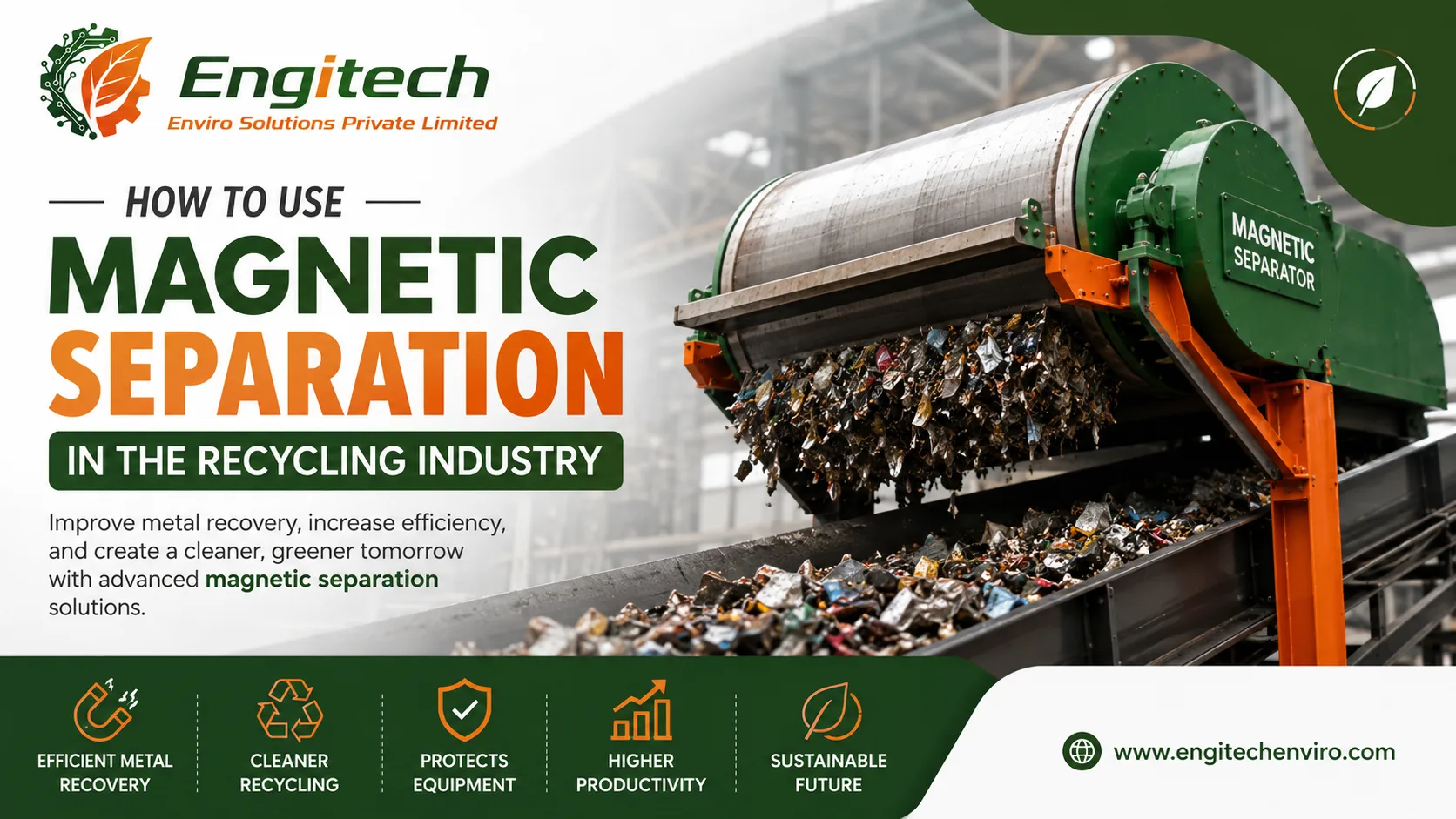
A magnetic drum separator is one of the most commonly used magnetic systems in recycling industries. It consists of a rotating drum with an internal magnet.
As waste material moves across the drum surface, magnetic particles stick to the drum while non-magnetic materials fall away separately.
Benefits of Magnetic Drum Separator
- Continuous automatic operation
- High metal recovery efficiency
- Low maintenance requirements
- Suitable for large-scale recycling plants
- Improves separation accuracy
Magnetic Separator Conveyor
A magnetic separator conveyor is installed over conveyor belts to remove metal contaminants during material transportation.
These systems are highly effective for handling mixed waste materials in continuous processing lines.
Advantages
- Easy installation
- Automatic metal removal
- Increased plant productivity
- Reduced labor costs
- Better operational safety
Magnet Separator in Scrap Recycling
A magnet separator is widely used in scrap yards and metal recovery plants. It helps separate iron and steel scrap from non-ferrous materials.
This process improves the value of recovered scrap and supports sustainable recycling operations.
SLON Magnetic Separator
The SLON magnetic separator is an advanced high-intensity magnetic system used for fine particle separation. It is commonly applied in mineral processing and specialized recycling operations.
These separators provide strong magnetic performance and are ideal for processing weakly magnetic seperation materials.
Features of SLON Magnetic Separator
- High magnetic intensity
- Energy-efficient operation
- Better recovery of fine particles
- Suitable for complex recycling processes
- Advanced industrial design
Applications of Magnetic Separation in Recycling Industry
Modern recycling plants use magnetic separation technology across various sectors.
Plastic Recycling
Plastic waste often contains metal contaminants like bottle caps, wires, and metal fragments. Magnetic systems remove these contaminants before further processing.
E-Waste Recycling
Electronic waste contains valuable metals such as iron, steel, and copper. Magnetic systems help recover ferrous materials efficiently.
Municipal Solid Waste Recycling
Waste management plants use magnetic separators to recover metals from household waste before landfill disposal.
Scrap Metal Recycling
Magnetic equipment helps separate ferrous scrap from mixed metal waste, increasing recycling value.
Construction Waste Recycling
Demolition waste often contains steel bars, nails, and metal components. Magnetic separators improve construction waste recovery efficiency.
Benefits of Using Magnetic Separation Technology
Using advanced magnetic separator machine systems offers long-term advantages for recycling industries.
Higher Profitability
Recovered metals can be sold and reused, creating additional revenue for recycling businesses.
Reduced Manual Labor
Automated magnetic systems minimize the need for manual sorting and improve workplace safety.
Faster Waste Processing
High-speed separation systems increase operational productivity and reduce downtime.
Sustainable Recycling Operations
Efficient recycling reduces environmental impact and supports green industrial practices.
Low Maintenance Costs
Modern magnetic systems are durable, reliable, and require minimal maintenance.
Why Recycling Industries Prefer Magnetic Separation
Today’s recycling facilities focus on efficiency, automation, and environmental sustainability. That is why magnetism separation has become a preferred technology across industries.
Compared to traditional sorting methods, magnetic systems provide:
- Faster processing
- Better accuracy
- Lower operational costs
- Improved worker safety
- Higher recovery rates
With rising industrial waste and increasing environmental regulations, the demand for advanced magnetic recycling equipment continues to grow globally.
Conclusion
The application of magnetic separation technology has revolutionized the recycling industry, providing improved metal recovery, minimizing contamination, and ensuring increased efficiency. Through innovations from simple magnet separators to complex machines such as magnetic drum separators, magnetic separator conveyors, and SLON magnetic separators, magnetic separation technologies assist recycling plants in becoming more productive and sustainable.
Here at Engitech Enviro, we know that efficient and sustainable recycling requires creativity, efficiency, and commitment to the environment. By using superior quality magnetic separator machine technology, industries can enhance their recycling operations while contributing to a more sustainable future.