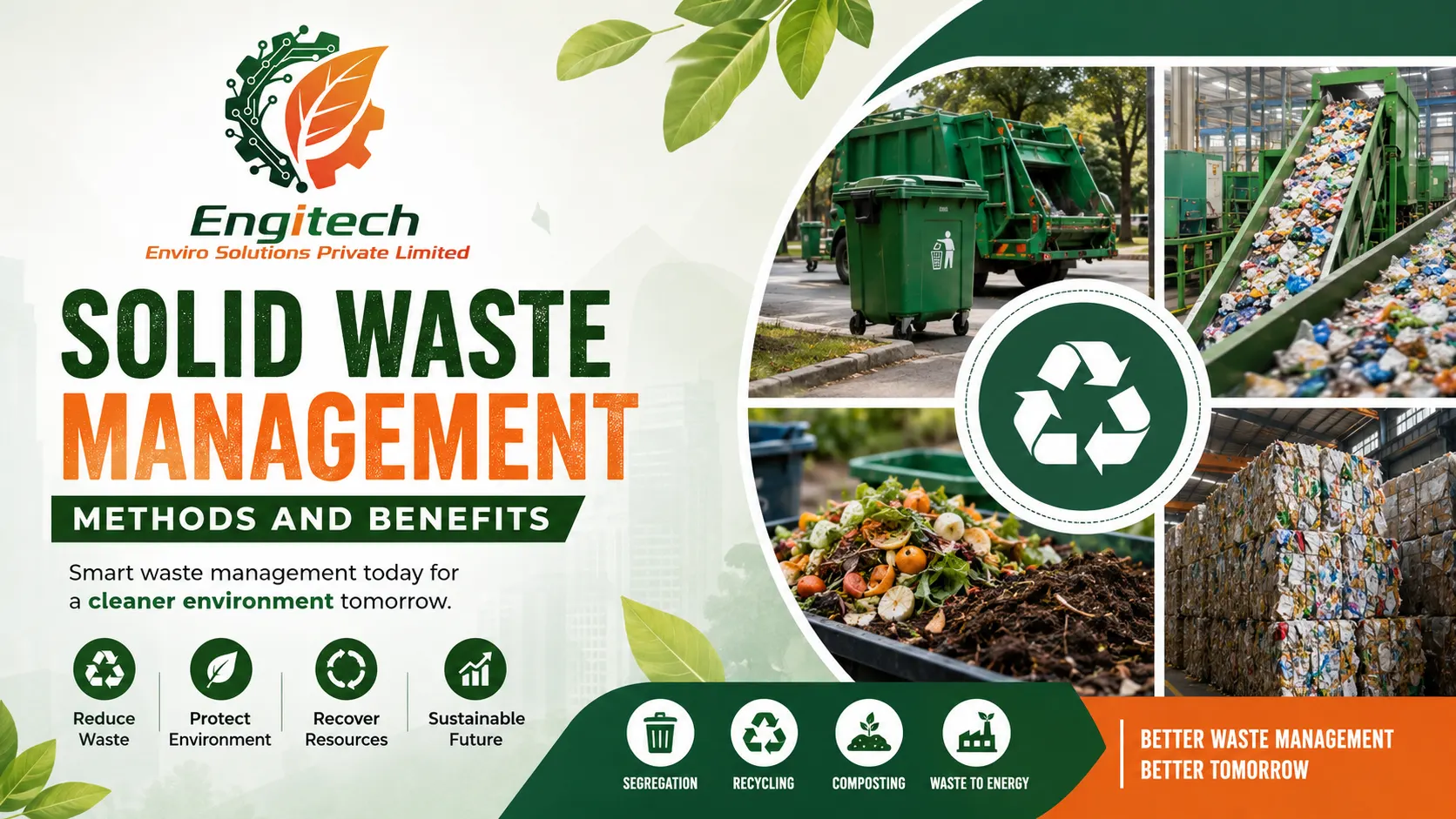
For Engitech Enviro, good solid waste management is important to ensure that the environment remains clean. Each household, factory, and other commercial entities generate waste each day, and the process of managing waste is vital to ensure that the environment remains protected. Good solid waste management helps prevent pollution and promotes a healthy lifestyle in the coming years.
When explaining what is solid waste management, one simply refers to the systematic collection, movement, treatment, recycling, and disposal of waste. The wastes could be generated from households, factories, hospitals, office places, and shopping centers. When the wastes are managed appropriately, it will be helpful in safeguarding our environment.
Importance of Waste Handling Systems
The increase in population, along with the development of industrial activities, has led to the necessity for efficient techniques and methods of solid waste management in urban and rural environments. If there are no proper mechanisms, the waste can cause contamination in water resources, soil pollution, and an unhealthy environment. Proper waste management techniques ensure that the area remains clean.
Present-day industries use advanced techniques and methods of waste management to reduce landfill waste and encourage recycling. The first step towards achieving efficient waste management involves classifying the waste as biodegradable, recyclable, and hazardous waste. This will make it easier for proper recycling techniques to be utilized.
Waste Segregation and Recycling
Solid waste segregation contributes greatly to effective methods of solid waste management systems due to its capacity to distinguish reusable items from dangerous waste. Segregation makes it possible for both industries and municipalities to recycle materials like plastics, metals, papers, and glass easily. Segregation also decreases the burden of dumping sites and landfills.
Recycling is one of the most effective strategies that can be used in solid waste management due to its capability of transforming waste items into usable items. Recyclable waste minimizes the exploitation of natural resources by conserving them. Recycling also promotes sustainable industrial development by minimizing energy use.
Composting and Organic Waste Solutions
Composting refers to the eco-friendly practice that is utilized in many ways in methods of waste management processes for dealing with biodegradable waste. The decay of organic substances such as vegetable waste, garden leaves, and crop wastes leads to the formation of nutritious compost that can help improve soil fertility.
Today, many companies and governments opt for composting for the disposal of solid waste management due to its environmental friendliness, since it helps reduce the amount of waste sent to landfills naturally. Besides, it helps minimize the emission of greenhouse gases resulting from decomposition in open dumps.
Waste-to-Energy Technologies
Waste-to-energy technology has emerged as one of the significant techniques used for modern waste management strategies. The process involves the conversion of waste products into electric power, heat, or fuel through various processes. The installation of waste-to-energy technology facilities assists industries in minimizing the reliance on landfills while producing renewable energy at the same time.
Innovative techniques for methods of solid waste management enable industries to effectively manage waste while ensuring that the environment remains sustainable. Energy recovery from solid wastes not only cuts down pollution levels but also enables companies to utilize an alternate source of energy.
Role of Landfills in Waste Disposal
Despite all other techniques, landfills continue to form one of the most popular means to dispose of non-recyclable solid waste. Modern sanitary landfills ensure proper protection against groundwater contamination. Appropriate management of the landfills ensures the reduction of environmental hazards.
Despite the usefulness of the process in some cases, there is a need for environmentally friendly methods of waste management processes to minimize the dependence on landfills. The practice of recycling waste is one such practice. Landfills continue to become less necessary due to the use of sustainable waste management techniques.
Environmental and Economic Benefits
One of the greatest benefits of good, solid waste management is its effect on the environment. Good treatment of solid waste minimizes air, water, and land pollution. It also protects natural resources. Cleaner environments promote biodiversity and healthier ecosystems for both man and other living organisms.
The economic benefit of efficient methods of solid waste management technologies is also significant to businesses and even the government. The recycling industry will provide more jobs. Businesses will also cut down operating costs through reduced waste and increased recycling in their businesses.
Public Health and Sustainable Future
It is necessary to understand what solid waste management is because the poor management of waste can lead to the spread of diseases and the creation of unhealthy environments. Unhygienic waste management leads to the breeding of pests, rats, and germs that cause harm to people’s lives. Good waste management practices ensure better cleanliness and safety in society.
Companies such as Engitech Enviro are helping make solid waste management processes sustainable through the provision of up-to-date technologies for better waste handling. The future of solid waste management relies on awareness, proper practice, and improved recycling technology.