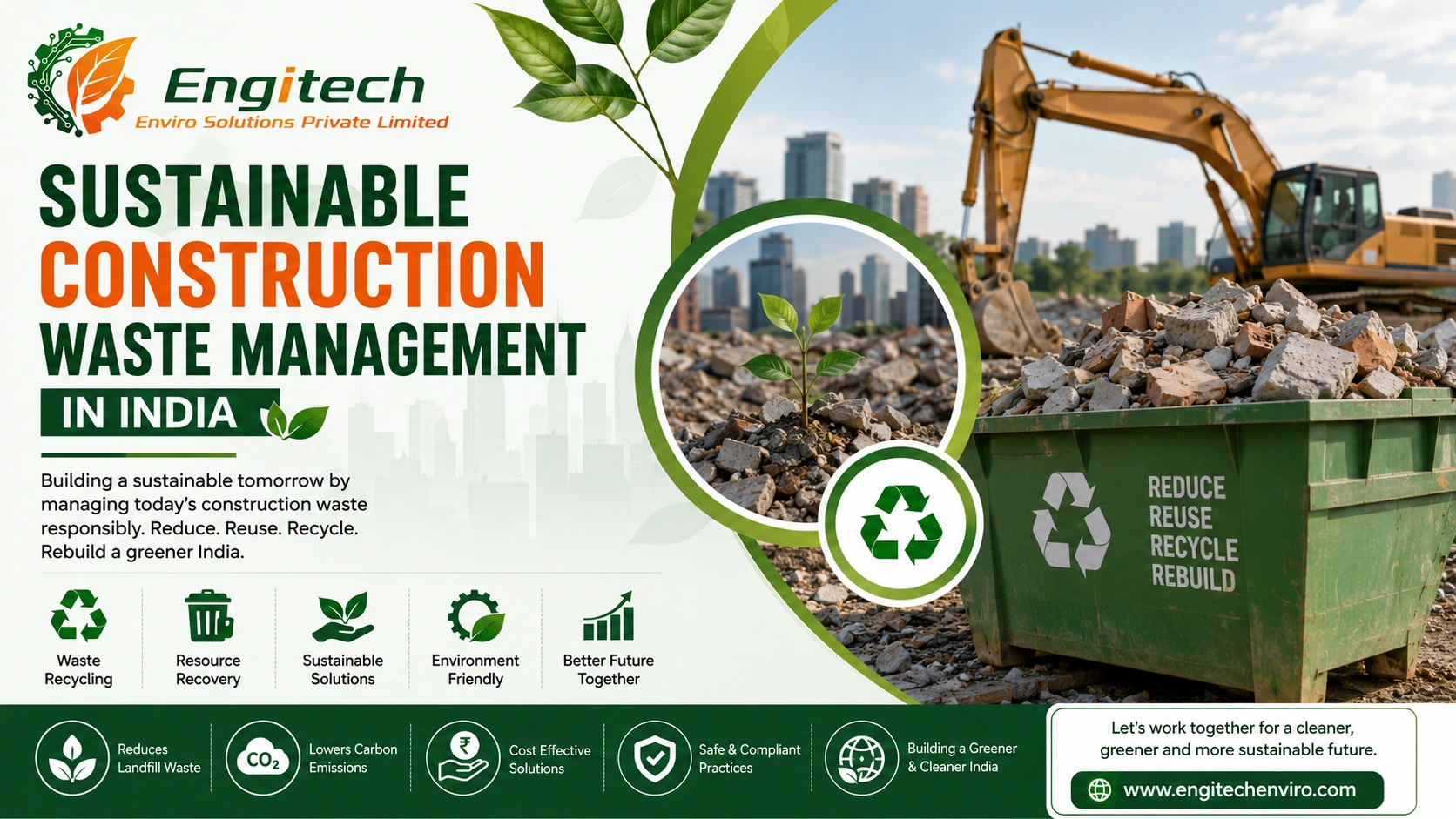
India’s infrastructure, urban areas, and industries are growing at an amazing pace. This growth brings new highways and smart cities, but also dumps tons of construction and demolition waste. Dealing with this waste properly has become a huge environmental issue. Not only is construction waste management sustainably good for the planet, but it’s also necessary to meet regulations and protect resources. It helps in cutting down pollution and making our cities more eco-friendly.
Engitech Enviro knows that proper waste handling can make a big difference. It not only cuts costs by reducing what goes to landfills, but also lets companies find value in recycled materials. In the end, everyone wins because we’re all working towards a cleaner future.
Understanding Construction and Demolition Waste
Construction and demolition waste management involves the collection, segregation, recycling, processing, transportation, and disposal of materials generated during construction, renovation, and demolition activities. This waste stream typically includes:
- Concrete debris
- Bricks and blocks
- Metals and steel
- Wood and timber
- Glass materials
- Asphalt
- Tiles and ceramics
- Excavated soil
- Gypsum and plaster
Without proper handling, these materials often end up in landfills, creating environmental hazards and wasting reusable resources. Sustainable construction waste disposal practices ensure that recoverable materials are recycled and reintroduced into the construction cycle.
Why Sustainable Construction Waste Management Matters
The construction sector is one of the largest consumers of natural resources. Every year, millions of tons of raw materials are extracted to support infrastructure development. Sustainable waste management in construction helps reduce dependency on virgin resources while minimizing environmental damage.
Key benefits include:
Resource Conservation
Recovered concrete, metals, wood, and aggregates can be reused in new projects, reducing the need for fresh raw materials.
Reduced Landfill Burden
Proper c&d waste management significantly decreases the volume of waste sent to landfills, extending landfill life and reducing environmental contamination.
Lower Carbon Emissions
Recycling materials requires less energy than manufacturing new products from raw resources, helping reduce greenhouse gas emissions.
Cost Savings
Construction companies can lower transportation and disposal expenses by implementing efficient waste recovery systems.
Regulatory Compliance
Governments increasingly mandate responsible waste management practices, making compliance essential for project approvals and sustainability certifications.
The Growing Importance of C&D Waste Management in India
India generates millions of tonnes of construction and demolition debris annually. As urban populations grow and infrastructure projects expand, the need for effective c and d waste management solutions continues to increase.
Major cities such as Delhi, Mumbai, Bengaluru, Hyderabad, Pune, and Chennai are actively promoting construction waste recycling facilities. These initiatives support sustainable urban development by diverting waste from landfills and transforming discarded materials into reusable construction products.
The growth of recycling facilities is creating new opportunities for businesses, municipalities, and environmental service providers across the country.
Sustainable Practices in Construction Waste Management
On-Site Waste Segregation
Separating waste materials at the project site improves recycling efficiency and prevents contamination of reusable resources.
Material Recovery
Construction waste management can often be processed into valuable secondary materials, including recycled aggregates, paving blocks, and road construction materials.
Recycling Technologies
Advanced recycling plants use crushing, screening, sorting, and separation systems to recover usable materials from mixed debris.
Circular Economy Approach
Modern construction projects increasingly adopt circular economy principles where materials remain in use for as long as possible through recycling and reuse.
Green Building Practices
Sustainable construction incorporates waste reduction strategies during project planning, design, and execution stages.
Challenges Facing Construction Waste Management
Despite significant progress, several obstacles continue to affect the growth of sustainable construction waste management practices in India.
Lack of Awareness
Many builders and contractors still underestimate the environmental and economic benefits of proper construction waste management.
Limited Recycling Infrastructure
Although recycling facilities are increasing, many regions still lack adequate processing capacity.
Transportation Difficulties
Moving large volumes of construction debris to recycling centers can be costly and time-consuming.
Inadequate Segregation
Mixed waste reduces recovery rates and increases processing complexity.
Compliance Issues
Ensuring adherence to evolving environmental regulations remains a challenge for many construction firms.
Addressing these issues requires collaboration between government agencies, private companies, environmental organizations, and construction waste management stakeholders.
Role of Recycling Companies in India
The growth of recycling companies in India has become a key factor in promoting sustainable construction waste management practices. These organizations convert waste materials into reusable products, helping reduce landfill dependence and conserve natural resources.
Recycling companies process:
- Concrete into recycled aggregates
- Metal scrap into reusable steel products
- Wood waste into engineered materials
- Glass into new construction products
- Asphalt into road-building material
Their contribution supports both environmental protection and economic development by creating value from discarded resources.
Investment Opportunities in the Recycling Sector
Growing environmental awareness has increased investor interest in sustainability-focused businesses. Many investors are exploring opportunities related to waste management stocks in India due to the sector’s strong long-term growth potential.
Factors driving investment include:
- Rapid urbanization
- Government sustainability initiatives
- Expanding recycling infrastructure
- Increasing environmental regulations
- Rising demand for circular economy solutions
Similarly, recycling stocks in India are attracting attention as recycling becomes an essential component of resource management and sustainable development.
As industries focus on environmental responsibility, companies involved in waste recovery, recycling technologies, and resource Construction Waste Management are expected to play a larger role in the economy.
Future of Sustainable Construction Waste Management
The future of construction waste management in India looks promising. Emerging technologies and sustainability initiatives are transforming how waste is handled and processed.
Future trends include:
- Smart waste monitoring systems
- AI-powered sorting technologies
- Automated recycling facilities
- Circular construction models
- Green building certifications
- Low-carbon construction practices
- Advanced material recovery systems
These innovations will improve efficiency, increase recycling rates, and support India’s broader sustainability goals.
How Engitech Enviro Supports Sustainable Waste Management
At Engitech Enviro, we are committed to promoting environmentally responsible waste management solutions that help organizations reduce their environmental footprint. Through innovative technologies, efficient processing systems, and sustainable practices, we support businesses seeking effective construction and demolition waste management strategies.
Our approach focuses on:
- Resource recovery and recycling
- Sustainable waste processing
- Environmental compliance
- Pollution reduction
- Circular economy implementation
- Long-term sustainability goals
By helping industries manage waste responsibly, Engitech Enviro contributes to building cleaner communities and a greener future.
Conclusion
Sustainable construction waste management is super important for modern infrastructure in India. It safeguards the environment and boosts the economy through recycling and resource recovery.
As more people get on board and build recycling facilities, managing construction and demolition waste management better will become even more crucial. Companies are popping up all over, folks are eyeing waste management as a solid stock choice, and the chance to recycle is getting bigger, showing that this field has tons of room to grow.
At Engitech Enviro, we think proper waste management is key to building sturdy cities, saving resources, and steering India towards a clean, green, sustainable future.