Introduction to Material Recovery Facility (MRF)
Each day, thousands of tons of waste products are produced from households, businesses, industrial plants, shopping centers, educational institutions, and commercial enterprises. However, contrary to common beliefs, not all waste products are disposed of in landfills. Some of the waste products could be recovered and converted into raw materials through recycling as long as it is done properly within a material recovery facility.
While there is more waste to be managed nowadays, what is also a challenge today is the inability of cities and industries to separate recyclable materials from the mixture of municipal solid waste. Landfill overflow, costly disposal, pollution of the environment, and wastage of recyclable material are just some of the issues being faced by communities today. These problems make the material recovery facility an indispensable part of the modern waste management system.
Engitech Enviro believes that all waste management initiatives should first start by identifying the customer’s problems and not by marketing machinery. When a municipality, private firm that recycles, industry, or an environmental consultant is going to undertake a recycling initiative, the aim is to increase waste recovery efficiency, decrease dependency on landfill sites, and to ensure that the environment remains clean. This is achieved through the use of a material recovery facility.
If you have ever been curious about what happens after the waste-collecting trucks leave your area, then this article will provide all the information that you need to know. From understanding the of MRF meaning, how MRF in waste management, how to do MRF waste management, as well as all the stages of a material recovery facility, this article gives you a step-by-step description.
Understanding Material Recovery Facility (MRF)
A material recovery facility is a recycling center where mixed solid waste is collected, sorted out, separated, and processed to extract the recyclable materials prior to disposal of the rest of the waste in another manner.
Put simply, MRF meaning denotes a recycling center that recovers valuable materials like paper, cardboards, plastics, metals, glass, and other recyclable products from municipal solid waste.
Understanding MRF meaning in waste management is important as the process of recycling begins with segregation. Improper segregation leads to contamination and loss of value of the recyclable materials.
Currently, almost all of the contemporary MRFs in waste management systems utilize state-of-the-art technology alongside the quality control measures carried out by hand.
The material recovery facility has become an integral part of the infrastructure of smart cities, industrial waste management systems, municipal corporations, and integrated recycling facilities.
Why Material Recovery Facilities Are Becoming Essential
Rapid urbanization has increased waste generation at an unprecedented rate. Unfortunately, landfill space is decreasing while environmental regulations are becoming stricter.
This is exactly why investing in an efficient material recovery facility is no longer an option—it’s becoming a necessity.
Some of the biggest problems faced by waste management authorities include:
- Mixed waste with poor segregation
- Rising landfill costs
- Low recycling efficiency
- Environmental pollution
- Greenhouse gas emissions
- Increasing transportation expenses
- Poor resource recovery
- Public health concerns
A properly planned material recovery facility addresses these problems by recovering reusable materials before waste reaches disposal sites.
Modern mrf waste management systems not only reduce environmental impact but also generate additional revenue through recyclable materials.
As governments continue strengthening recycling policies, the role of MRF in solid waste management is becoming increasingly significant across urban and industrial sectors.
What Types of Waste Are Processed Inside a Material Recovery Facility?
One common misconception is that every type of waste enters the same recycling process. In reality, a material recovery facility is designed primarily for handling recyclable municipal solid waste.
Typical materials include:
- Plastic bottles
- Plastic containers
- Cardboard
- Corrugated boxes
- Newspapers
- Office paper
- Glass bottles
- Aluminum cans
- Steel containers
- Beverage cartons
- Packaging materials
- Textile waste
- Small wood pieces
- Recyclable household waste
Depending on project requirements, different materials recovery facility layouts may also process commercial waste, institutional waste, packaging waste, and selected industrial recyclables.
Efficient mrf waste processing begins with proper waste collection, transportation, and controlled feeding into the plant.
MRF Meaning in Work – What Actually Happens?
Many people search online for the mrf meaning in work because they want to understand what the facility actually does rather than its definition.
Simply put, the mrf meaning in work refers to the complete operational process where mixed waste is converted into multiple recyclable streams through systematic segregation.
Instead of treating waste as garbage, an efficient material recovery facility views it as a collection of valuable resources waiting to be separated.
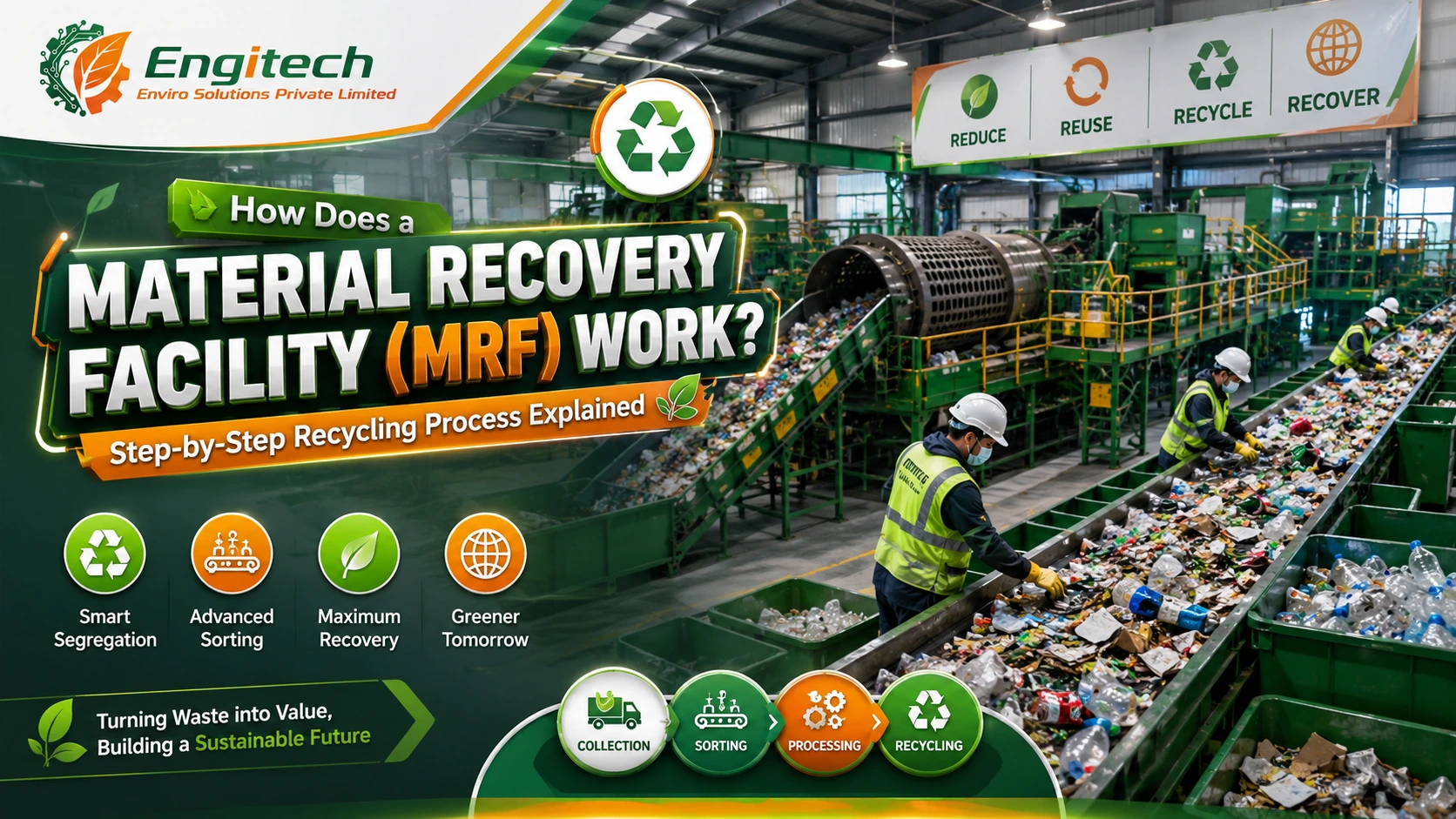
Every conveyor, separator, screen, magnet, blower, and sorting station works together to maximize recovery while reducing landfill waste.
This is the true objective of modern mrf waste management.
Step-by-Step Recycling Process Inside a Material Recovery Facility
Understanding the working process helps organizations plan better recycling projects and improve recovery efficiency.
Step 1: Waste Collection and Transportation
Everything starts with waste collection.
Municipal collection vehicles, commercial transport trucks, industries, and private waste collection agencies deliver mixed waste to the material recovery facility.
Before unloading, every vehicle is generally weighed using weighbridges to monitor incoming waste quantity.
This information helps improve operational planning and recycling efficiency.
Efficient logistics are one of the key foundations of a successful MRF in waste management operations.
Step 2: Initial Waste Inspection
Once waste reaches the tipping floor, trained operators inspect the incoming material.
The purpose is to identify:
- Oversized objects
- Hazardous materials
- Medical waste
- Construction debris
- Large metal pieces
- Items that may damage equipment
Removing these materials improves plant safety and protects downstream machines.
This inspection stage plays a major role in MRF in solid waste management because contamination can reduce recovery efficiency.
Step 3: Controlled Waste Feeding
After inspection, waste is transferred to the feeding system.
Feed hoppers, conveyors, and controlled loading systems ensure that waste enters the plant at a uniform rate.
Consistent feeding is extremely important because overloaded equipment reduces separation accuracy.
Modern materials recovery facility designs carefully balance throughput with sorting efficiency.
Proper feeding also improves the performance of every machine used in mrf waste processing.
Step 4: Primary Size Separation
The next stage involves separating waste according to size.
Machines such as trommel screens or rotary screening systems divide the waste into different size fractions.
Smaller organic-rich particles are separated from larger recyclable materials.
This stage improves the efficiency of the remaining recycling process because different waste sizes require different separation techniques.
Many advanced material recovery facility projects use customized screening equipment depending on local waste characteristics.
Step 5: Manual Pre-Sorting
Although automation continues improving, experienced workers still play a valuable role.
At this stage, operators manually remove:
- Large plastic sheets
- Textiles
- Bulky waste
- Rubber items
- Wooden objects
- Oversized contaminants
Manual inspection improves product quality before automated sorting begins.
It also reduces equipment wear and increases overall recovery performance.
This human-machine combination has become a standard practice in modern MRF waste management facilities.
Step 6: Magnetic Separation
Ferrous metals such as iron and steel are separated using powerful magnetic separators.
These recovered metals can later be recycled into new industrial products.
Metal recovery not only reduces landfill waste but also creates additional revenue opportunities for recycling companies.
This is another reason why the material recovery facility plays such an important role in building a circular economy.
As technology continues to develop in the sphere of recycling, the future of the MRF in waste management the integration of intelligent automation with the efficient separation of materials and the sustainable extraction of resources. The next step in our recycling guide will be dedicated to further description of the recycling process as well as to the discussion of how plastics, paper, glass, and non-ferrous metals are separated. In addition, we will consider the benefits of the material recovery facility, provide a table with technical specifications, and answer frequently asked questions.
Step 7: Air Separation for Lightweight Materials
Once separation is done using magnetic fields, the waste material goes through air classification machines. Air classification uses controlled air flow to separate light waste materials such as films, paper, and other packaging materials from heavier ones. This increases the purity of the recyclable materials and reduces any form of contamination in the output material.
Current operations in material recovery facilities involve sophisticated air separation machines to improve efficiency in recycling while reducing manpower requirements. An effective air separation process makes MRF waste management more efficient as recyclable materials are channeled into the right processing line.
Step 8: Non-Ferrous Metal Separation
Unlike iron and steel, metals such as aluminum cannot be recovered using magnets. Therefore, modern recycling plants use eddy current separators to remove non-ferrous metals.
These recovered metals are highly valuable because they can be recycled repeatedly without losing their properties. This stage significantly improves the overall profitability of a material recovery facility while reducing the demand for virgin raw materials.
The increasing adoption of advanced metal recovery systems has made MRF in waste management more efficient and environmentally responsible.
Step 9: Optical Sorting of Plastics and Paper
One of the most advanced stages inside a material recovery facility is optical sorting.
Special sensors identify different types of plastics, paper grades, cartons, and packaging materials based on their optical characteristics. High-speed air jets then separate each material into dedicated collection streams.
Optical sorting improves recycling accuracy, reduces contamination, and increases the market value of recovered materials.
Today, automated sorting has become one of the most important technologies in MRF in solid waste management, allowing facilities to achieve higher recovery rates with greater consistency.
Step 10: Manual Quality Inspection
Even after automated sorting, trained operators perform a final quality inspection.
This stage removes any remaining contaminants and ensures that each recyclable material meets industry quality standards before further processing.
Manual quality control is still considered an essential part of every successful materials recovery facility, as it helps maintain product consistency and customer confidence.
Step 11: Baling and Storage
After complete segregation, recyclable materials such as paper, cardboard, plastics, metals, and cartons are compressed into dense bales using hydraulic baling machines.
Baling offers several advantages:
- Reduces storage space
- Lowers transportation costs
- Improves handling efficiency
- Protects recyclable materials
- Increases resale value
Proper bale preparation is an important stage in mrf waste processing because it ensures that recovered materials can be transported safely to recycling industries.
Step 12: Dispatch to Recycling Industries
Finally, the recovered materials are supplied to paper mills, plastic recycling plants, metal industries, glass manufacturers, and other recycling units where they become raw materials for new products.
Instead of ending up in landfills, these materials re-enter the manufacturing cycle, conserving natural resources and reducing environmental pollution.
This complete journey clearly demonstrates why a material recovery facility is one of the most valuable investments in modern recycling infrastructure.
Key Benefits of a Material Recovery Facility
An efficient material recovery facility offers advantages that extend far beyond simple waste segregation. It creates long-term environmental, economic, and social value.
Some of the major benefits include:
- Higher recycling efficiency
- Significant reduction in landfill waste
- Better recovery of valuable recyclable materials
- Lower environmental pollution
- Reduced greenhouse gas emissions
- Improved waste handling efficiency
- Better compliance with environmental regulations
- Reduced transportation and disposal costs
- Revenue generation through recyclable materials
- Cleaner and healthier communities
- Conservation of natural resources
- Support for circular economy initiatives
These benefits explain why MRF meaning in waste management has become increasingly important for municipalities, industries, and waste management companies across the world.
Technical Specification Table for a Material Recovery Facility
| Specification | Details |
|---|---|
| Plant Type | Material Recovery Facility (MRF) |
| Waste Category | Municipal Solid Waste (MSW), Commercial & Industrial Recyclables |
| Processing Capacity | 5 TPD to 500+ TPD (Customizable) |
| Waste Feeding System | Hopper with Belt Conveyor |
| Primary Screening | Trommel Screen / Rotary Screen |
| Metal Separation | Magnetic Separator & Eddy Current Separator |
| Plastic Separation | Optical Sorter / Manual Sorting |
| Air Classification | High-Efficiency Air Separator |
| Conveyor System | Heavy-Duty Belt Conveyors |
| Sorting Platform | Manual & Automated Sorting Lines |
| Baling System | Hydraulic Baling Press |
| Dust Control | Dust Collection System |
| Control System | PLC-Based Automation (Optional) |
| End Products | Paper, Plastic, Glass, Metals, Cardboard & Other Recyclables |
| Application | Municipal Corporations, Smart Cities, Recycling Plants, Industrial Waste Management Projects |
Note: Plant specifications vary depending on waste composition, processing capacity, automation level, and customer requirements.
Choosing the Right Material Recovery Facility
Every city, municipality, and recycling project has different waste characteristics. Therefore, selecting the right material recovery facility requires careful planning rather than simply purchasing equipment.
Important factors include:
- Daily waste generation
- Waste composition
- Required recovery percentage
- Available installation space
- Future expansion plans
- Automation requirements
- Local environmental regulations
- Maintenance accessibility
- Energy efficiency
- Long-term operating costs
Engitech Enviro realizes that every project for recycling is unique. Rather than offering a generic solution, what we do is study the needs of the client and determine which recycling machine is ideal for their purposes. Through careful consideration of all aspects of the project, we try to make sure that resource recovery and good recycling practices are possible.
Conclusion
With growing urbanization and an annual increase in the amount of waste generated, recycling has turned into a necessary responsibility, rather than just an optional one. The effective construction of a materials recovery facility will help in recovering valuable recyclable materials, reducing dependency on landfill sites, conserving natural resources, and creating cleaner environments.
Learning about mrf meaning, mrf meaning in work, and mrf meaning in waste management is very important for industries, municipalities, and environmental institutions to take informed decisions regarding recycling infrastructure plans.
The contemporary MRF in waste management involves advanced engineering design, smart sorting technology, and sustainable resource recovery to optimize recycling performance. Similarly, MRF in solid waste management has turned out to be one of the key pillars of circular economy strategies as it ensures that recyclable materials don’t become waste but get used productively instead.
If you are planning a recycling project or upgrading your facility, choosing a proper materials recovery facility according to your specific waste properties and needs is the basic step towards successful operation. We at Engitech Enviro, with our practical engineering knowledge and customer-first attitude, are always ready to assist you in recycling.
Frequently Asked Questions
1. What is a Material Recovery Facility (MRF)?
A material recovery facility is a specialized recycling plant where mixed solid waste is sorted, separated, and processed to recover valuable recyclable materials such as paper, plastic, metals, glass, and cardboard before the remaining waste is sent for further treatment or disposal.
2. What is the MRF meaning in waste management?
The MRF meaning in waste management refers to a facility that improves recycling efficiency by separating recyclable materials from municipal solid waste, reducing landfill disposal, and promoting sustainable resource recovery.
3. How does MRF waste management improve recycling?
MRF waste management uses a combination of conveyors, screens, magnetic separators, air classifiers, optical sorters, and manual inspection to recover recyclable materials efficiently while minimizing contamination.
4. What materials are recovered inside a Materials Recovery Facility?
A materials recovery facility commonly recovers paper, cardboard, plastic bottles, plastic containers, aluminum cans, steel, glass, cartons, and several other recyclable materials depending on the waste stream.
5. Why is MRF important in solid waste management?
MRF in solid waste management plays a vital role by reducing landfill waste, conserving natural resources, improving recycling rates, lowering environmental pollution, and supporting circular economy goals.
6. How do I choose the right Material Recovery Facility?
The ideal material recovery facility depends on daily waste quantity, waste composition, available land, automation requirements, recovery targets, budget, maintenance needs, and future expansion plans. Consulting experienced engineering professionals helps ensure the facility is designed for long-term efficiency and sustainability.